PTI
Dushanbe
India on Tuesday said that there can be “no justification” for terrorism and “no double standards” in addressing the menace, as it called on the Shanghai Cooperation Organisation (SCO) member states to make concerted efforts to “dismantle” the entire “ecosystem of terrorism.”
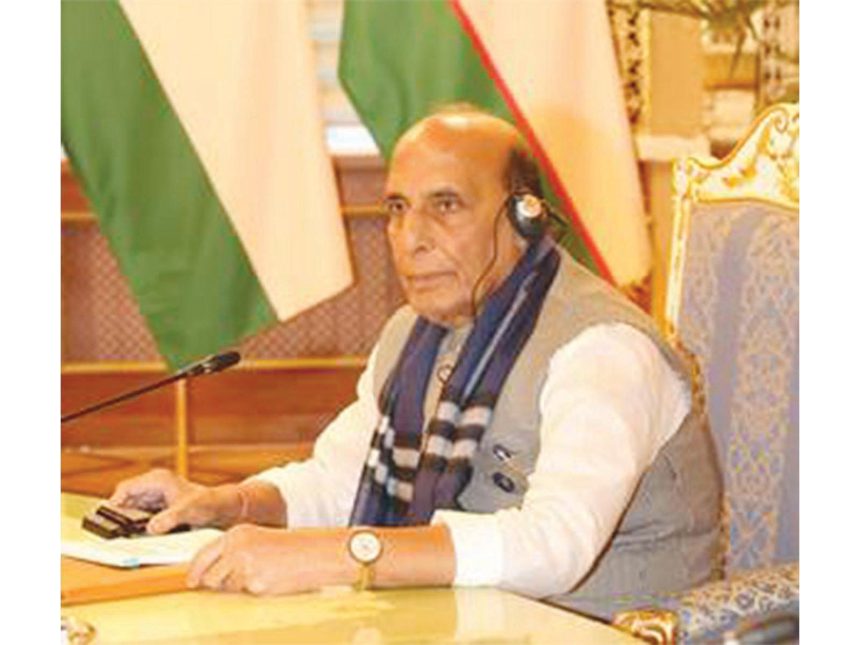
Addressing the 25th Meeting of the Council of Heads of Government of the SCO in Tajikistan’s capital Dushanbe, Defence Minister Rajnath Singh also said that terrorism radicalises societies and deprives youth of the opportunities they deserve.
“There can be no justification for terrorism, no double standards in addressing it, and no place for those who finance, support, or provide safe havens to terrorists,” Singh told the gathering, which included Pakistan’s Deputy Prime Minister Ishaq Dar, who was seated at the same table.
Singh underlined that terrorism results in the loss of innocent lives and disrupts investment and commerce.
The minister called upon the SCO members “to make concerted efforts to dismantle the entire ecosystem of terrorism,” describing the menace as “one of the gravest threats” to peace and development.
He also announced that India will host the first Shanghai Cooperation Organisation (SCO) Civilisational Dialogue Forum by the end of this year and invited all member countries to participate in it.
In his address, Singh also recalled the deliberations at the SCO Summit in Bishkek in August-September 2026.
, when Prime Minister Narendra Modi underlined the need for concrete steps by the SCO on issues related to security, connectivity, and opportunity.
“India believes that the SCO must remain efficient and steadfast in its adherence to the principles of sovereign equality, consensus, and mutual respect. A greater number of institutions does not necessarily translate into greater achievements,” he said, adding that new mechanisms should focus on clearly identified needs, avoid duplication, and prioritise delivering practical value to SCO members.
Singh emphasised the need for the SCO to build consensus and translate it into concrete action to address an uncertain global economic environment marked by geopolitical tensions, trade and supply chain disruptions, concerns over energy and food security, and emerging technological divides.
“There is a need to strengthen resilient supply chains, facilitate trade and investment, and leverage technology to drive development,” he said.
Singh also reaffirmed India’s support for the adoption of an Action Plan for the Multilateral Trade and Economic Cooperation Programme for the period 2026-2030 and welcomed the decisions taken at the Bishkek Summit to establish the Universal Centre in Tashkent and the Anti-Drug Centre in Dushanbe as permanent bodies of the grouping.
Their effectiveness, he said, would depend on efficient coordination and timely execution of tasks.