AP
Washington
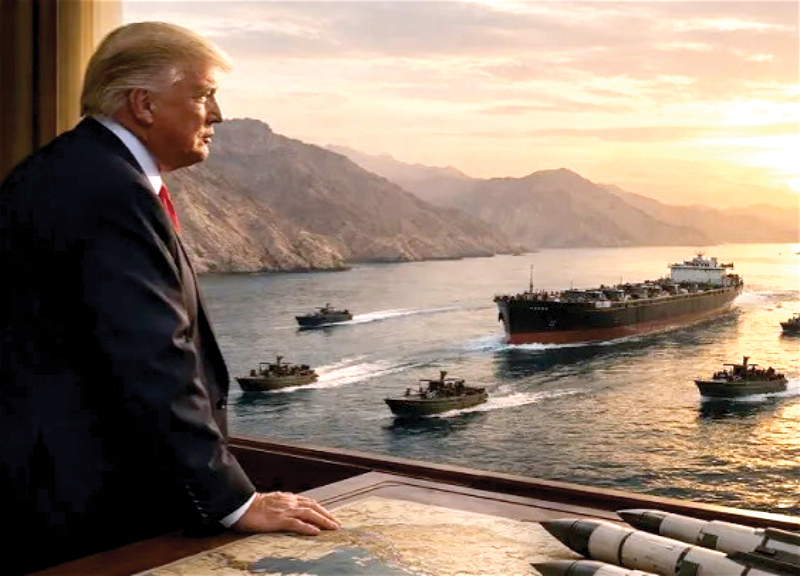
The US President Donald Trump posted on social media that Iran’s military has been destroyed and that America is beginning to open up the Strait of Hormuz, the waterway chokepoint used by Iran to restrict the shipping of 20 per cent of the world’s oil supplies.
It was unclear from the post if Trump was referring to the possible use of mines in the Strait of Hormuz or Iran’s broader ability to control the area.
“We’re now starting the process of clearing out the Strait of Hormuz as a favour to Countries all over the World, including China, Japan, South Korea, France, Germany, and many others,” Trump posted. “Incredibly, they don’t have the Courage or Will to do this work themselves.”
“Today, we began the process of establishing a new passage and we will share this safe pathway with the maritime industry soon to encourage the free flow of commerce,” Admiral Brad Cooper, the head of Central Command, said.
“We’re now starting the process of clearing out the Strait of Hormuz,” Trump wrote in a Truth Social post, adding that “all 28” of Iran’s “mine dropper boats are also lying at the bottom of the sea.”
Trump has repeatedly said that American forces have destroyed Iran’s navy and air force while crippling its ballistic missile and nuclear programs.
But fear of Iranian attacks on shipping over the past several weeks has effectively closed the Strait of Hormuz, a critical conduit for global oil supplies.
Throttling the strait has disrupted global energy markets.
US gasoline prices have spiked even though most of the oil that flows through the waterway does not go to the United States.
Representatives from the US and Iran began talks hosted by Pakistan in Islamabad on Saturday amid a fragile ceasefire in the conflict.
Navy destroyers USS Frank E Petersen and USS Michael Murphy have transited the strait of Hormuz into the Arabian Gulf, marking the start of a mission to clear the waterway of sea mines laid by the IRGC, according to the statement.
The operation aims to restore passage to the world’s most vital energy corridor, which has been effectively blocked for over six weeks, causing a global surge in oil prices and historic supply disruptions.