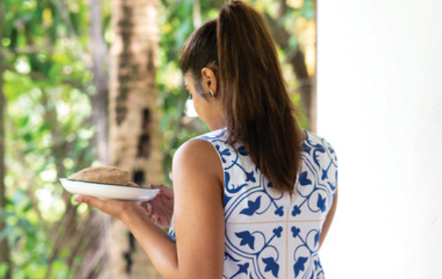
The traditional azulejos, a unique art form brought to Goa by the Portuguese, are now being reinvented in jewellery, fashion, and decor
RACHEL ALAINA SHAH
In Goa, the azulejo art form has long existed as part of the architecture and landscape. The blue and white tile patterns have been used on the walls of old homes, streets, churches, and on nameplates around the state. They are part of the state’s visual culture and deeply tied to the Goan identity. However, this heritage craft is now being reimagined for the modern market.
Across Goa, creators are adapting the hand-painted blue and white motifs into design products that not only carry aesthetic appeal but also exhibit personal expressions of identity. No longer confined to architecture alone, there is an emergence of jewellery, clothing items, home decor, and souvenirs influenced by this art form. For many buyers, these items function as wearable and mobile reminders of Goa and its culture. “When people buy my jewellery, the response I get from almost everyone is, ‘this is so Goan’. It has a very big cultural significance as an art form in Goa.” says McCoy D’Silva, the founder of
O Artesão, an online business that specialises in hand-painted tiles and azulejo-inspired artefacts
Some creators like Shivaani Vaishnavi who specialises in creating resin jewellery, have also created works around the azulejo theme. “A lot of people who visit Goa want to take back something meaningful that reminds them of the place and creating accessories like earrings, inspired by azulejos, makes the art form more accessible. Many customers are drawn to the emotional connection the pieces have with Goa and its visual culture,” she says.
Fashion designer Prachi Kamat agrees. Kamat who specialises in collections based on cultural art forms has come out with designs inspired by azulejos like sarees and dresses. “Whenever we have taken the azulejo print for exhibitions, people can immediately relate it to Goa. In fact, we usually have a separate rack only with azulejo print, because people love taking it as a souvenir,” she says.
Taking things further, some artists are also doing DIY workshops which allow participants themselves to create a piece featuring the azulejo art. Among these is Michelle Faria, who founded The Blue Brush Studio. Her immersive art workshops which she began a year ago, feature azulejos patterns which are not only painted on canvases but on tote bags, lamps and shells to name a few.
“I love everything about azulejos – the patterns, designs, colours and even understanding how they are actually done,” she says. And based on her observations, a lot of people are equally intrigued by it. “Even for weddings, I’ve seen people push towards azulejos themes and patterns because it looks more sophisticated than other colours,” she says. “People also want to include azulejos in small spaces.”
However, this growth in commercialisation raises some important questions – has the rise in souvenir culture and adaption of the art for accessories and fashion products reduced its cultural significance?
Orlando de Noronha does not believe so. Noronha is said to be the first to introduce locally designed azulejos in Goa and runs Azulejos de Goa store in Panaji since 1998.
“Anyone who has been to Goa, has been seeing these tiles all over. It’s fantastic to see it being adapted into accessories and clothes. It’s another medium of expression of showcasing this beautiful art,” he says.
Rowan Serrão, the founder of Serrao Wood Co, which has been doing a lot of azulejo work feels that it is beautiful to see local artists and makers interpreting this art from in their own unique ways. “This keeps the culture alive rather than simply preserving it,” he says.
But, he reiterates, it is important to respect the origins of the art form while allowing creative reinterpretation. “It should not be treated as just a pretty blue and white pattern but people have to be reminded that there’s a story behind those patterns. The hand-painted feel, the connection to Goa and the people making it should still be respected,” he says. “Azulejos can still feel fresh and modern without losing their soul.”