From 60-hour challenges to AI experiments and documentary work, a wide range of short-form storytelling was showcased across categories at Waves
RAMANDEEP KAUR | NT buzz
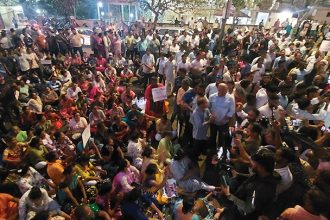
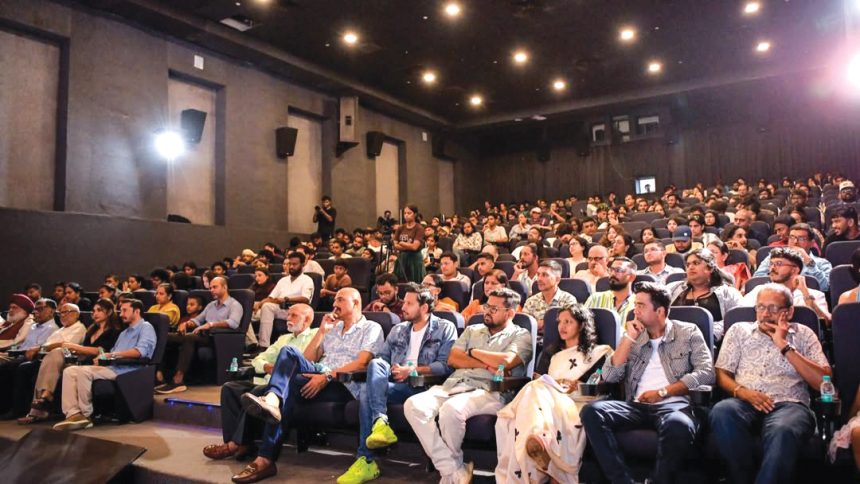
The Waves International Short Film Festival concluded its third edition with an awards ceremony at the Entertainment Society of Goa, following 632 entries this year. Of these, 234 films from various countries were screened during the festival. Around 40 entries came from Goa.
Co-organiser and director Raj Govekar says, “The rising number of entries shows steady growth in participation.” He adds that entries are coming from more regions and different formats.
The festival included student projects, first-time filmmakers and experienced directors.
Along with screenings, Govekar says they are also using podcasts and audience interactions to give filmmakers additional visibility.
Govekar says more films are being made in Goa, with improvement in storytelling and execution. “We plan to introduce vertical drama as a new category in future editions,” he says.
In the Open Category, ‘Autopsy’ by Omkar Chandrakant Masurkar won Best Film. In the Goan Konkani section, ‘Halad’ by Sobita Shaba Kudtarkar won Best Film.
‘Happy Birthday Joshi’ by Anshul Kumar Sharma, under Ajay Devgn’s production, won the Best AI-Generated Film award. ‘Piso’ by Glen Cardozo won the Best Ad Film Commercial award.
‘Of Forests and Footprints’ by Shreya Samvatsar won Best Documentary, while ‘Beacon of Light’ by Jayshree Verma won Best Animated Film. In the Best Music Video category, ‘Ganapati Tu Sarvashrestha’ by Ramprasad Adpaikar won the award.
‘Umedh’ by Mayuresh Salgaonkar won Best Film in the 60 Hours Short Film Challenge.
‘Piso’
‘Piso’ was made as a road safety public service advertisement for a Goa government initiative. Shot in a single day, it is about the importance of wearing helmets while riding two-wheelers. It is set in everyday public spaces such as tea stalls and streets, where people are seen wearing helmets even when not riding, out of fear of reckless riders without helmets.
Inspired by the Konkani song ‘Piso’ by Lorna Cordeiro, the track is used throughout the background score. “The idea was to show that people without helmets are the real ‘pisos’ but in a humorous way,” says filmmaker Glenn Cardozo from Margao.
He says the main challenge was fitting the idea into a one-minute format and credits his team for shaping the film. A creative choice was the use of on-screen text for dialogues and sound effects, including scenes like a cat meowing and toy cars crashing. “I like experimenting, so we tried that format,” he says. Shooting outdoors needed local cooperation and working with an eight-year-old child actor (Adenpoul Simoes) was a bit difficult, which caused minor delays but the team managed to finish the work.”
‘Autopsy’
Produced by Mumbai-based Khatyal Films and Production, ‘Autopsy’ portrays Jayant, who is dealing with the recent death of his wife and an autopsy ward worker Yamaba, whose job involves handling dead bodies on a daily basis. The narrative focuses on their interaction in a hospital setting.
Writer Mansi More says the idea came from exploring how people with different lived experiences of loss respond when placed in the same environment. “The title ‘Autopsy’ goes beyond an autopsy of the body and has a wider meaning in the film,” she says.
Work on the project began in early 2023 and was completed by mid-2025. It has since been screened at around eight film festivals. One of the more complex sequences, she explains, was a long take shot early in the schedule, moving from inside a hospital ward to an outdoor area. She adds, “The scene required coordination of movement, lighting changes and timing. It was difficult to execute, especially since it was the first shot we attempted.” The team also worked within limited budget constraints throughout production.
More says audience reactions after screenings are usually quiet. “People sit through the credits without much noise.”
‘Ganapati Tu Sarvashrestha’
The devotional music video ‘Ganapati Tu Sarvashrestha’ is set against a Ganesh Chaturthi family backdrop. It presents a family story about coming together during the festival despite differences within the household. The video is available on YouTube. “It feels good to see a Lord Ganesha-based project getting appreciation from both the audience and the jury,” says lyricist and composer Neelai Manguesh Naik.
The project, which took about five to six months to complete, began with lyrics written in devotion, which were later turned into a full song. “Once the track was ready, the team decided to make a music video,” says Naik.
‘Happy Birthday Joshi’
Writer, creative director and producer of the film, Vatsal Sheth, says the idea of the film goes back to his school and computer science days when he first learned about what is considered the world’s first computer virus.
“When I got into films, I kept thinking about it. I wanted to build a story around it, who could have made it and why,” he says.
The project later became ‘Happy Birthday Joshi’ on AI under his AI studio. “No producer was ready to support it as a live-action short. It stayed in development for a long time. With AI, we could finally make it,” he says, while expressing gratitude to Ajay Devgn’s Prismix Studios for supporting the project. “He believed in the idea right from the beginning.”
Actor Aditya Kapadia plays Joshi. His performance was recorded first and then used to create the final character.
‘Umedh’
For the team, ‘Umedh’ (meaning joy) ended up reflecting the mood in which it was made, as the film went on to win multiple awards at the festival. “We never expected to win six awards. I was confident about our actors getting something but the rest came as a surprise,” says director Mayuresh Salgaonkar.
The film follows a struggling actor who is forced to step away from his dream of acting and take up difficult life choices.
The biggest constraint in the making, says Salgaonkar, was time. “We had 60 hours so everything had to move fast. We used whatever was available and a lot of decisions were taken on the spot,” he says, adding that since he has been a part of the Waves platform for five years, the core team was used to short turnaround times. “But some of the crew were doing this for the first time, so aligning everyone within the timeline was difficult,” he says.
‘Beacon of Light’
This stop-motion film has been done by second-year Animation Cinema students (Jayshree Verma, Sanket Nikam, Sneh Jaiswal, Mayuresh More, Anindita Naskar and Roshni Tigga) from the Satyajit Ray Film & Television Institute (SRFTI), Kolkata.
According to Verma, this was their first experience with stop motion, with learning at every stage of production.
The story is about a lighthouse keeper who has spent years alone until a sunrise changes how he sees his surroundings. The film took around eleven weeks in total to complete. “More than the award itself, it was the feeling that our work had connected with people that mattered,” says Verma.
Sound design was done by Sayan Biswas, a second-year Sound Design and Recording student at SRFTI, Kolkata, while music was composed by Rahul (Oddsol), Mumbai.
Verma says the film, initially titled ‘Raahi’ and later referred to as ‘Beacon of Light’, began with an observation about routine and isolation in everyday life.
‘Of Forests and Footprints’
Wildlife filmmaker and director Shreya Samvatsar’s documentary explores the creation of Kanha National Park, MP, through the relocation of tribal communities during its formation. The film is based on first-hand accounts of people who lived in the area. Kanha is now known for its tigers, barasingha and biodiversity. The documentary took around five years to complete and the filmmaker had two main challenges: handling a sensitive subject and learning technical aspects of filmmaking like cinematography and sound while making the film. “Volunteering with organisations working in these regions, along with college studies on tribal relocation and protected areas, helped develop the project,” says Samvatsar from Mumbai. The film is her debut documentary. “It feels unreal for my first documentary to get this recognition,” she says.