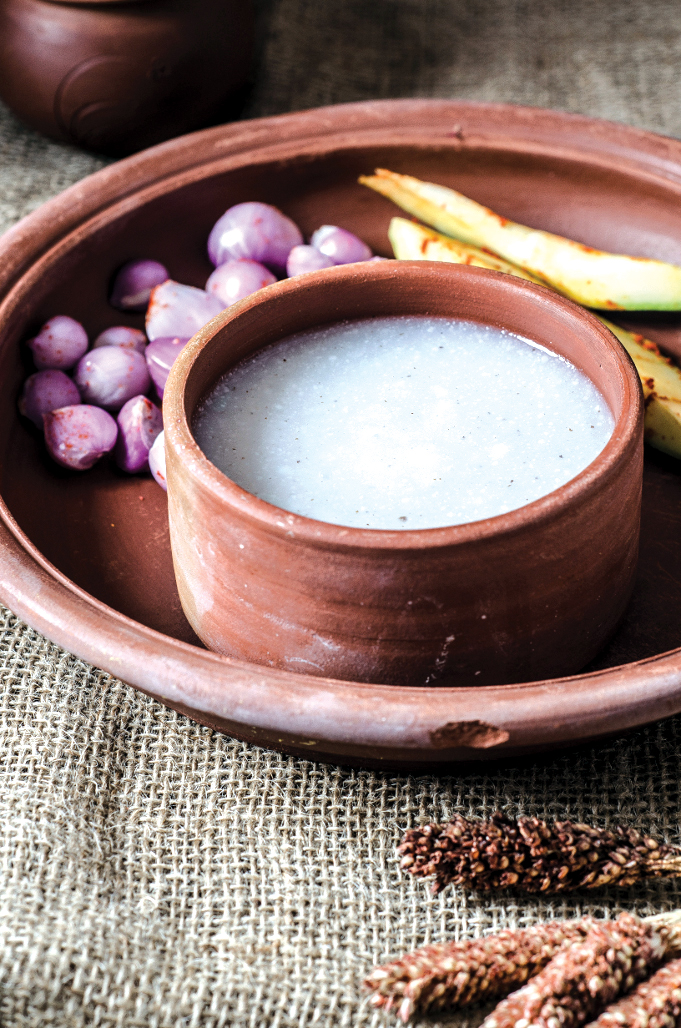
The traditional Indian diet includes many fermented foods and drinks made by different species of micro-organisms giving each food distinct flavour characteristics, making it a source of probiotics or good bacteria which helps keep our digestive system healthy.
Fermentation is an anaerobic process in which certain desirable bacteria or yeasts naturally present in foods, convert the sugars in food into other compounds like alcohol or organic acids, while also producing energy for themselves. The process of fermentation increases the digestibility since the starch and protein are in pre-digested form. It also doubles the vitamin B content and increases the bio-availability of iron. Fermentation particularly of pulses and cereals eliminates anti-nutrients such as phytic acid which would hinder the absorption of the nutrients. Here are some of the indigenous
probiotic foods.
Fermented Ragi: Known as Ambali, it is a gluten free fermented semi liquid beverage from Karnataka and Tamil Nadu. Prepared from ragi or nachni flour and Ambali a rich source of protein, calcium, potassium, B-complex, carbohydrates from starch, vitamins and bioavailable iron. Being fibre rich, it is digested slowly and this keeps one full for longer thereby helping to control food intake and preventing spikes in blood sugar levels.
Its high calcium content helps strengthen the bones thereby reducing the risk of fractures and the development of osteoporosis. It also has a high content of antioxidant polyphenols which have several health benefits. Consumption of ragi is believed to help relax the body and aid in wound healing. Ambali is prepared by cooking ragi flour in water for a few minutes. It is then cooled and mixed with beaten curd orbuttermilk along with jeera, salt and chopped onions and is tempered with mustard seeds, hing and curry leaves.
Fermented Rice Gruel: Known as pazhan kanji or pokhala bhaat or panta bhaat, this humble food item was a poor man’s breakfast particularly in Kerala, Tamil Nadu, Andhra Pradesh, Orissa, West Bengal and Assam along with buttermilk and chilly chutney. Fermented rice is prepared by soaking leftover cooked brown rice in water overnight in an earthen vessel. It is found that the bacteria generated in the rice during fermentation produces lactic acid, which breaks down the anti-nutritional factors in rice resulting in increased bioavailability of minerals such as iron, calcium and potassium. The high potassium content of helps reduce blood pressure. Fermented rice is rich in magnesium and selenium. Magnesium along with calcium helps strengthen the bones while selenium is an antioxidant which helps protect the body from degenerative disease and cancer. Although there is no concrete evidence available, studies have shown that consumption of fermented rice helps prevent fatigue, cures ulcers, helps relieve constipation, increases the secretion of breast milk in lactating
mothers.
Gajjar Ki Kanji: This is a traditional wine-coloured beverage that is prepared during winter in northern India. It is prepared by boiling pieces of purple-coloured carrots (kali gajjar) in water. The boiled carrot pieces along with the water are placed in a jar along with mustard powder, rock salt, asafoetida and red chilli powder and the closed jar is kept in the sun for fout to five days. The fermentation process results in the development of probiotics. Gajjar ki kanji is rich in beta-carotene, vitamin C and potassium. It contains anthocyanin pigments that belong to the polyphenol family. Anthocyanins function as antioxidants, protecting the body from damage due to oxidative stress. Oxidative stress has been linked to the development of inflammation, cancer and other degenerative disorders.
Hawaijar: This is an alkaline fermented dish native to Manipur. It is prepared from soyabeans and is a rich source of protein and is characterised by itsbrown in colour with sticky slimy white appearance that emits light ammoniacal aroma. Hawaijar is a naturally fermented as no microbial starter culture is intentionally added during its preparation. It consists of a natural cocktail of microorganisms which promote fermentation, the main one being strains of Bacillus bacteria which function as probiotics. Nutritionally hawijar is a rich source of protein, vitamins, minerals and fibre. The fermentation process destroys the antinutrients such as goitogens that are naturally present in soyabean. Besides hawaijar, other fermented soybean products are prepared and consumed extensively in almost all the states of north-east India.
Gundruk: Originally a Nepali dish, but is prepared and consumed widely in the north eastern states of Assam, Arunachal Pradesh and Meghalaya. Gundruk is fermented green leafy vegetableswhich are dried, stored and used for months and becomea valuable source of vitamins and minerals during the cold winter months when no fresh vegetables are available. Gundruk is rich in B vitamins, calcium, sodium and potassium. It is a versatile food that is served as an appetizer or a side dish, but can also be made into a soup.
(The writer is a consultant nutritionist practising at Panaji.)