The ‘My Own Collection’ at the Goa Science Centre brings together collectors of all ages showcasing hobbies built through years of curiosity, preservation and passion
VINIKA VISWAMBHARAN
What may appear to be ordinary objects to some are treasured pieces of memory for others. From old coins passed down through generations to carefully preserved chocolate wrappers and foreign currency notes collected over the years, the upcoming ‘My Own Collection’ at the Goa Science Centre, Miramar, will showcase the stories and emotions attached to personal collections.
The exhibition organised as part of International Museum Day celebrations, in collaboration with the Directorate of Museums will be held from May 16 to 18 and will feature hobbyists from across Goa displaying collections they have spent years building.
According to centre head of Goa Science Centre, Abhimanyu Bhelave, the idea behind the exhibition is to highlight the stories hidden within everyday objects. “In the museum, we say objects tell stories,” says Bhelave. “Some people collect coins, some collect stamps, some collect stones, antique pieces or records. Every collection has a story.”
He adds that the exhibition is intended to encourage people to appreciate the effort and passion behind personal archives. “Holding this kind of exhibition creates awareness about these hobbies. People preserve things very carefully and there is an art even in storing objects properly,” he says.
A total of 24 people are participating. Bhelave says such exhibitions often attract families looking for something different during the summer holidays. “People wait for these events,” he says. “They come with children, relatives and friends. They enjoy seeing collections that are unusual and diverse.”
Among the participants this year is 14-year-old Anjali Mayenkar from Miramar, who will display a collection of British-era coins, Mughal coins and currencies from nearly 50 countries. Her interest in numismatics began after discovering old coins preserved by her mother from her own childhood. Over the years, the collection grew through research, travel and contributions from relatives and friends. “My mother made sure I studied every coin, researched where it came from and wrote about its significance. It has become a learning process for me,” she shares.
The collection also carries a strong generational connection. “I had found my grandfather’s coins in our 150-year-old ancestral house during my school days,” her mother recalls. “Later, Anjali found the same collection and became curious about it. From there, we started building it again together.” Friends and relatives travelling abroad now contribute foreign coins and currency notes to her growing archive.
For photographer Ashlesh Kamat from Curchorem, preserving memories can be as simple as saving a chocolate wrapper. Kamat, who has been collecting various objects since childhood, will display his growing collection of chocolate wrappers at the exhibition this year. The collection includes limited edition wrappers linked to cricket tournaments, Valentine’s Day campaigns, and discontinued flavours.
“Though it is the same chocolate, the wrappers keep changing every few months,” says Kamat. “Sometimes a flavour comes only once and disappears forever. I wanted to preserve those little moments.” Being in a creative profession, Kamat sees collecting as both nostalgic and innovative. “When I see an old wrapper from the 1990s, it takes me back to that time,” he says. “You remember eating that chocolate and you also see how packaging and design have evolved.” He carefully opens each wrapper without tearing it, flattens it and stores it in protective sleeves. “The idea is to preserve things that people usually throw away,” he says. “Everything is becoming digital now. These are things you can still touch, feel and physically experience.”
Kamat says social media helps create a growing community of collectors across the world. Through platforms such as Instagram and Facebook, he exchanges wrappers and interacts with hobbyists from countries including the Netherlands. “You search for one collection online and suddenly you discover so many people preserving things that are slowly disappearing,” he says. “It is not about money. It is about keeping memories alive.”
Kamat also hopes the exhibition will inspire younger generations to develop hobbies of their own. “Small things become memories over time,” he says. “Today people are even collecting old stickers and cards from the 1990s. Things that looked ordinary then have become valuable memories now.”
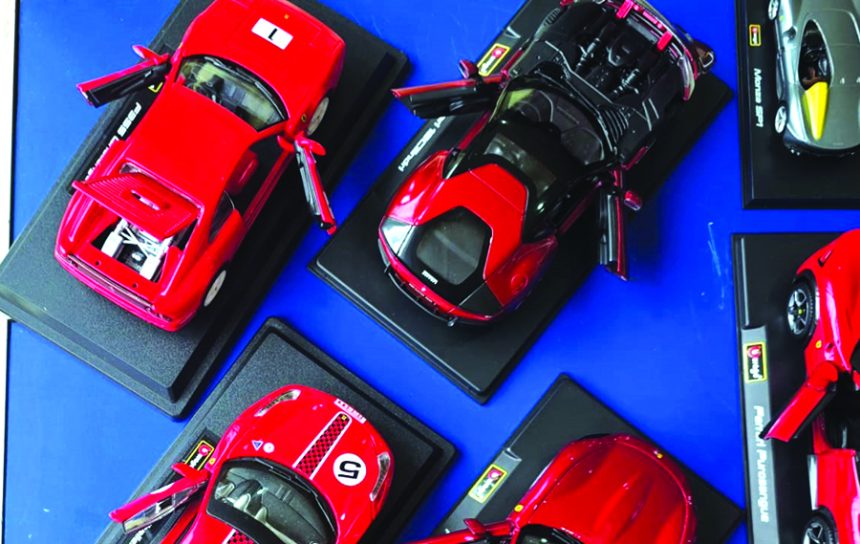
Among the first-time participants is Vinit Naik, who will be showcasing stamps tracing the history of Ferrari cars alongside die-cast models. “I collect different kinds of stamps, but for this exhibition I wanted to focus specifically on Ferrari because of my interest in automobiles,” says Naik, who runs an IT business in Panaji and holds a master’s degree in automotive technology. Naik has visited the exhibition several times in the past as a visitor before deciding to exhibit this year for the first time.
Also participating is Bernard Rodrigues, a recently retired senior professor from the Botany discipline at Goa University, who will present a collection of post-Independence Indian stamps dating from 1949 to 1984. Having collected stamps for the past 42 years, Rodrigues will display a five-frame exhibit comprising 18 sheets. “Whenever such exhibitions are organised, I always try to participate because it gives collectors an opportunity to share their passion and knowledge with others,” he says.