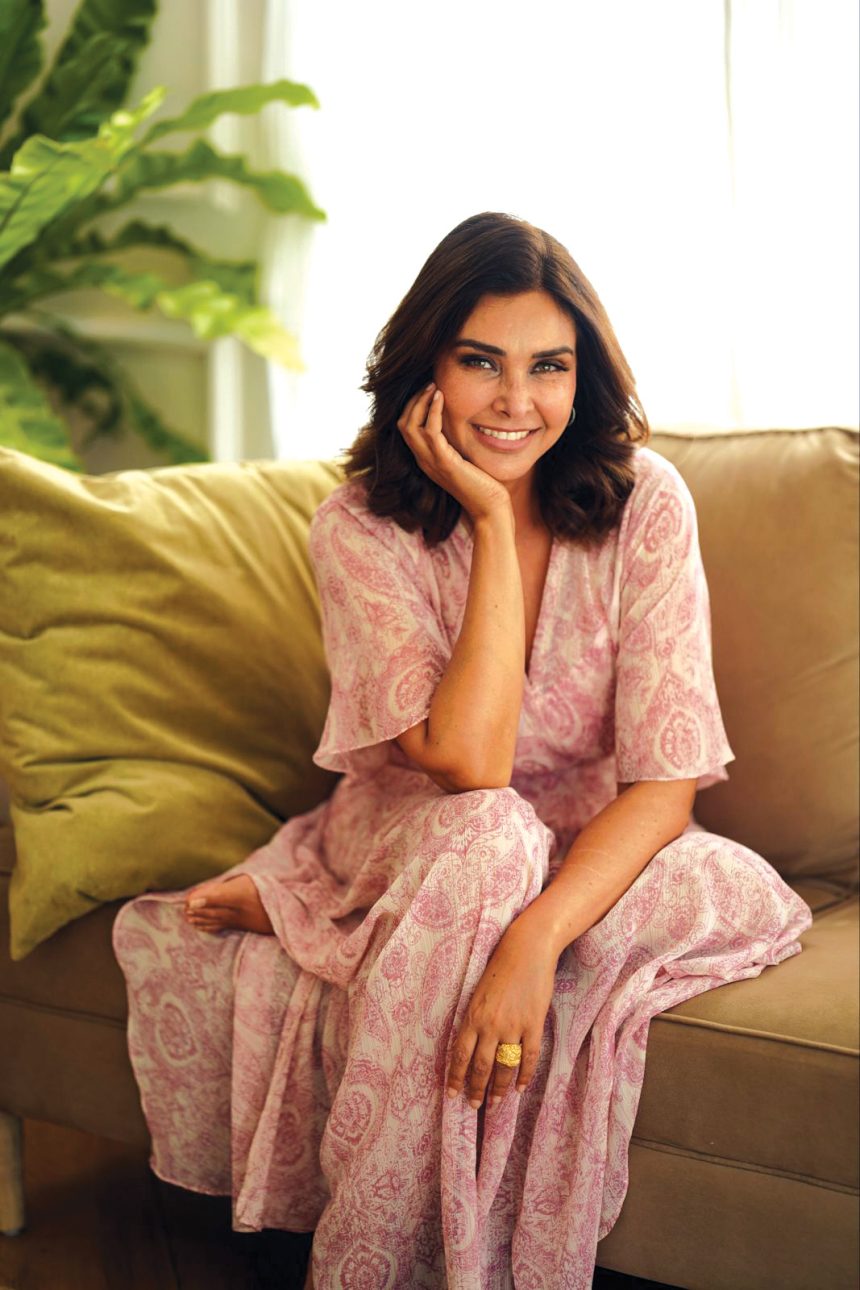
Actress Lisa Ray and Dr Reina Punj outline a holistic, science-backed approach to supporting women with perimenopause and menopause with NuHer, which will have its official launch in Goa
VINIKA VISWAMBHARAN | NT BUZZ
It began with an experience that actress Lisa Ray had not been prepared for. “At 37, I entered menopause as a result of cancer treatment,” she says. “While I was prepared to fight cancer, I was not prepared for the silence around menopause. There was no real conversation around symptoms like brain fog, fatigue, or anxiety, and very little support to understand what was happening to my body.”
Over time, she began to recognise the pattern beyond her own experience. “Many women were going through the same thing.” What emerged from that realisation was a clear intention. “The aim was to create a space where women could move from simply enduring this phase to understanding it, with the support of science and empathy.”
That now takes the form of NuHer, a science-backed wellness clinic that Ray will launch in Goa on April 11 alongside endocrinology specialist Dr Reina Punj. Together, they are attempting to address what they both describe as a persistent gap in how perimenopause and menopause are understood, and treated.
“Women’s health has often been overlooked once reproductive years are seen as complete,” says Ray. Menopause, she adds, is still entangled with discomfort around ageing. “As a result, many women are conditioned to tolerate symptoms rather than question them.”
In clinical settings, this often translates into missed or delayed care. Punj points to a fundamental misunderstanding at the heart of the issue. “Menopause is still seen as a single event rather than a long, dynamic transition,” she explains. “Perimenopause can begin years before periods stop, yet most women are only counselled once cycles cease.” The symptoms themselves do not always announce their cause clearly. “Women are often told their reports are ‘normal’, when in reality their symptoms reflect subtle but significant hormonal
shifts,” she says.
NuHer positions itself within this gap, bringing together multiple strands of care under one framework. Ray emphasises that the clinic is built on “established clinical evidence” and supported by specialists across internal medicine, endocrinology, and gynaecology. At the same time, the model extends beyond conventional treatment silos. “We also integrate lifestyle factors such as nutrition, sleep, and mental health, but always under medical guidance.”
This integrated approach is key for Punj. “At NuHer, we look at the woman as a whole system, not just a set of symptoms,” she says. Hormonal changes are inseparable from wider physiological and behavioural patterns, including “nutrition, sleep, stress, gut health, and metabolic function”. The clinic’s structure reflects that understanding. “We combine evidence-based hormone therapy, micronutrient optimisation, lifestyle interventions, and advanced diagnostics into one cohesive plan.”
Early recognition, both emphasise, is critical. Punj lists disrupted sleep, mood changes, irregular cycles, and reduced stress tolerance among the early signs. “Paying attention to these allows us to intervene before symptoms escalate.”
Yet what remains most under-addressed, Ray argues, is not just the physical but the emotional toll. “Existing treatment approaches focus mostly on managing hot flashes, while generally ignoring the emotional side,” she says. Many women, she points out, experience grief or loss of one’s sense of identity during this phase. “Mental health needs to be included in all stages of a woman’s life. It shouldn’t be considered an afterthought.”
If the clinic is one part of the response, conversation is the other. Ray has chosen to speak openly about her own experience as a way to shift the narrative. “By being open and visible, we reduce the stigma involved with menopause,” she says. The effect, she has observed, is immediate. “It gives many women an opportunity to share their truth.” In doing so, the conversation moves beyond the private space of a consultation room into a more collective,
visible dialogue.
Punj sees this as integral to better health outcomes. “Menopause has long been experienced in silence, and that often leads to confusion, fear, and delayed care,” she says. “When women share their experiences, it normalises symptoms and encourages earlier intervention.” Community, in this sense, becomes a form of validation as much as support.
The choice of Goa as a launch location aligns with this broader framing. “Goa embodies a distinct blend of wellness, contemplation, and a slower pace of living with greater intention,” Ray says. It allows NuHer to be positioned not only as a medical space, but as part of a wider shift in how women approach their
health and time.
Their collaboration itself is structured around complementary roles. Ray describes her position as an advocate and visionary, bridging the gap from the patient’s experience to a professional clinical context. Punj and the clinical board, she adds, ensure clinical integrity through their oversight and scientific expertise. Together, they are building what Ray calls “a sanctuary while providing exceptional levels of clinical care”.
Both return, ultimately, to the question of perception. Ray speaks of moving women from suffering to sovereignty. She says, “Women should know they have the right to ask for help”. Punj frames it as a shift in narrative. “I would want menopause to be seen not as a decline, but as a transition that can be managed proactively and positively.”
(NuHer will be launched on
April 11, 11 a.m. at Solene, Moira)