

VINIKA VISWAMBHARAN
NT BUZZ
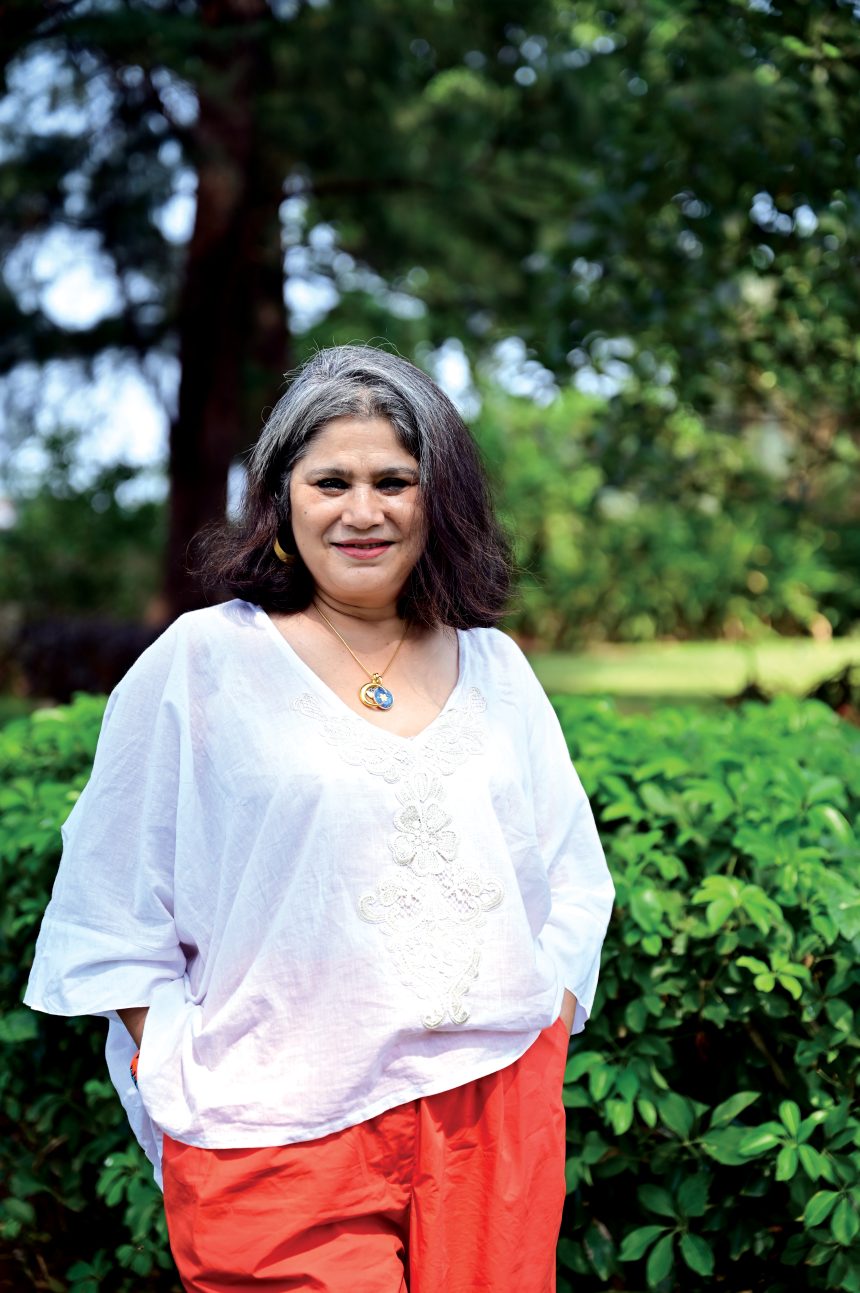
When Sheeba Shah talks about her writing, she does not speak of plot twists or grand literary ideas first. She speaks of feelings. Of grief that lingers. Of relationships that never quite heal. Of the quiet ache of wanting someone who is right beside you and yet emotionally
out of reach.
“I deal with emotions,” she says. “The darker, the better for me. That’s where stories come from.”
Her latest novel, ‘Mother Mine’, which she will discuss at the Goa Arts and Literature Festival (GALF) this month, is perhaps her most intimate work yet. A tender, unsettling exploration of a fractured mother and daughter relationship, the book is rooted in a deeply personal loss.
“In 2001, I lost my brother,” says Shah. “He was killed by the Maoist insurgents. It was sudden, violent, and it shattered our family.” Everyone in her family grieved differently. “My father and I held on to each other,” she recalls. “But my mother completely withdrew. She shut herself off from the world. Even when I was sitting with her, I felt like I was searching for her. I kept thinking, what is going on in your mind? Why can’t we talk?”
That ache, that invisible distance between mother and daughter, stayed with her long after the mourning years passed. Eventually, it became the emotional core of ‘Mother Mine’. “This book is really about a daughter’s search for her mother,” says Shah. “Not just travelling to find her, but trying to reach her emotionally.”
The novel follows Medha, a young woman who comes to Goa to reconnect with her estranged mother Priya, a once-ambitious woman who had left her child behind to chase acting dreams in Mumbai. The reunion is tender, uneasy, and filled with unspoken history.
Priya’s backstory, explains Shah, was born from her own years in Mumbai. “I lived in Versova for three years, and it’s full of struggling actors,” she says. “You see them everywhere, in supermarkets, cafés, on the streets. I kept wondering what brought them there. What did they leave behind? What were their stories? That curiosity slowly shaped Priya.”
But ‘Mother Mine’ avoids easy moral judgement. Priya is neither villain nor martyr. “In India, we tend to see mothers in extremes,” says Shah. “Either they’re completely selfless or completely terrible. But real women aren’t like that. Priya is flawed. She carries guilt. She’s confused. She doesn’t know how to repair the past. I wanted her to feel human.”
In fact, she admits, she sometimes wishes she had made Priya harsher. “Maybe it would have been more dramatic. Readers like to be disturbed. But I couldn’t do it. I wanted honesty, not cruelty for effect.”
The emotional difference between mother and daughter is also reflected in the writing style. Medha’s chapters are in the first person, intimate and immediate, while Priya’s are written in the third. “With Medha, I felt very connected,” says Shah. “First person gives you freedom. You can breathe inside the character. With Priya, I naturally felt a little detached, so the third person came automatically. It created
that distance.”
At its heart, ‘Mother Mine’ asks a question many of us quietly carry. How well do we really know the people closest to us? “Sometimes,” says Shah, “even when someone is right next to you, you’re still searching for them.”
Themes of migration and belonging run quietly through the novel, mirroring Shah’s own life. Born in Nepal, she has lived in multiple cities before finally settling in Goa. “Migration feels exciting at first,” she reflects. “You think you’re starting fresh. But uprooting yourself is painful too. You leave behind familiarity and comfort. There’s always a sense of displacement.”
In the book, Medha experiences Goa through a visitor’s lens. “She’s a tourist,” Shah says. “So she sees the beaches, cafés, restaurants, bars. I didn’t want to pretend to go deep into Goan culture or households. The story is about the characters and their emotions, not about documenting Goa.”
Yet for Shah herself, Goa is far more than a setting. It is home in the most instinctive sense. Her move here, she says, was driven by something she still can’t fully explain. “I hadn’t even visited Goa when I first felt this pull,” she recalls. “I was sitting in Nepal, looking up house rentals online and calling brokers. I just knew I wanted to be here. There was no logical reason.”
When she finally moved in 2015, the feeling was immediate. “I remember thinking, I’ve arrived,” she says. “Something changed in me. I became more confident, more vocal. Earlier I was shy. Goa opened me up. It gave me a sense of belonging I didn’t have before.”
Today, Shah resides in the quiet village of Oulaulim in North Goa, surrounded by greenery and slower rhythms. The calm suits her. “I love this side,” she says. “I like being away from the chaos.”
But one thing remains non-negotiable. “I need cafés,” she laughs. “I can’t write at home. My dogs, my sofa, everything distracts me. I sit in cafés for eight or nine hours at a stretch and write. That’s my routine.” Her process is loose and instinctive. She writes a draft, sets it aside for months, then returns to edit with fresh eyes. The story of ‘Mother Mine’ itself took around a year to write and refine.
Despite several books to her name, the impulse to write remains unchanged since childhood. “I’ve always wanted to be a writer, ever since I was 10,” she says. “There was never any other plan.”
This year marks Shah’s third appearance at GALF, a festival she says she enjoys for its conversations and readers. “It’s always nice to meet people who actually want to talk about books and ideas,” she says. “That exchange means a lot.”
(Signed copies of ‘Mother Mine’
are now available at Broadway.)

