Miguel Braganza
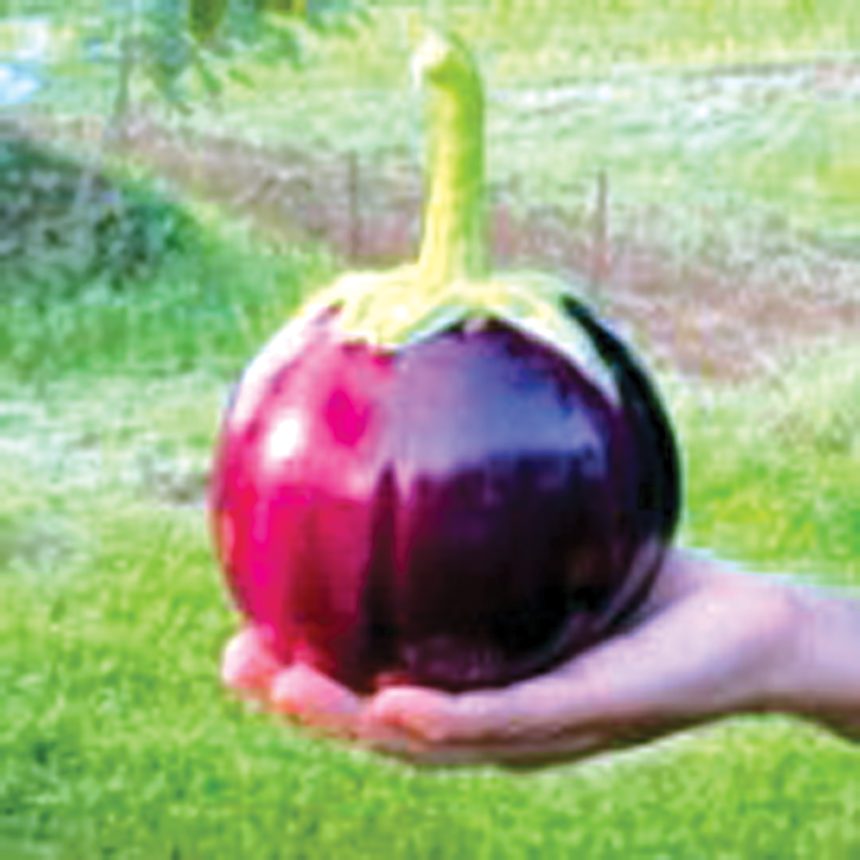
The Carnival ends today and from Ash Wednesday tomorrow starts forty-six days of Lent till Easter on April 5. Abstinence from meat makes us find alternatives and the aubergine or eggplant, that we call brinjal in India, provides a great alternative to meat. Goa has the ‘Geographical Indication’ for both its local varieties, known simply by the name of the village that nurtured each type: Agassaim (or Agacaim) and Taleigao.
Brinjals can be rawa-fried like fish fillet or cut into discs as per the Goan tradition of faddi or kapam. One can also roast them on hot coals and make a wonderful bhart with finely chopped onions and green chili. The smaller brinjals can be cut and stuffed with onion and masala before frying or cooking. The miniature Cherry brinjals or Turkey brinjals are normally deep fried and eaten with curds or yogurt. Brinjals are best when grown organically at home and now students learn how to grow them at school.
Of the two schools that come to my mind, one is the Spring Valley High School in Pilerne that is still known as Chubby Cheeks, led by Selina D’Souza, and the other is St. Joseph’s Primary School in Baina-Vasco mentored by Marvelyn Dias. If one does not believe that primary school students can memorise botanical names of plants and can identify them on the ground, then Baina is where one needs to go to discover how wrong that assumption is. These Class 3 students do their own composting and grow plants organically.
NABARD-Goa regional office, under Usha Ramesh supported Chubby Cheeks Spring Valley High School, Pilerne, to scale up the school kitchen garden during the COVID-19 pandemic period. Its students win prizes every year at the SFX High School’s ‘Festival of Plants and Flowers’ for more than a decade now. Rare is the year in which the Spring Valley team has to settle for the second spot. They know their plants from years of experience. It now has a higher secondary section and is bound to increase the competition in this category so far dominated by the Harmal Panchakroshi HSS, Pernem at the SFX plant festival.
It is the era of the apartment blocks and these residences have created their own system of gardening, specially kitchen gardening. One can no longer walk into one’s Porsum and pick green chilies, tomatoes or lemons in the backyard: there is no backyard! All these plants have to be grown in pots. Brinjals, like chilies and tomatoes grow well in pots if there is good sunlight or if it is mimicked by a LED bulb lit from sunset to dinner time to extend the ‘daylight’ hours.
It is best to buy brinjal and tomato seedlings from a nursery, even online. Seedlings are available at the famed Friday Market at Mapusa from 7 a.m. to 9 a.m., or a little later if stocks last. Unfortunately, brinjal seeds are not available at the Zonal Agriculture Offices of the Directorate of Agriculture this year but one can buy them online or with private vendors. Efforts of the ICAR-CCARI, Old Goa, to preserve the local brinjal varieties must be appreciated but only commercial seed and crop production in Goa will give the farmers any benefit from the G.I. tags.