In a place known for susegad living, NT BUZZ asks why leisure in Goa is slowly becoming a luxury
VINIKA VISWAMBHARAN | NT BUZZ
In Goa today, meeting friends often comes with a bill. Indeed, for a state built around tourism and hospitality, there has been a quiet decline of everyday public space. Hotels, resorts and restaurants flourish, but once visitors leave and locals look for somewhere to sit, the options shrink.
Urban sociologist Ray Oldenburg called these missing places “third spaces”. Home is the first space. Work or school is the second. Third spaces are the informal public spots in between, where people simply exist without pressure to spend money. Parks, libraries, promenades, church squares, maidans, beaches, bus stops, street corners. The everyday living rooms of a community.
Third spaces are not glamorous. They do not generate revenue or Instagrammable moments. They are simply places where life happens, where friendships are made, arguments are had, romances begin.
But in modern times, many of those spaces are either disappearing, fenced off or quietly commercialised. “If we want to meet, we automatically end up in a café,” says 27-year-old project executive Rhea Naik. “Even if you just want to talk, you have to order something. Hanging out has become expensive.
Cafés have become the default social infrastructure. They are comfortable and safe, but they come with rising prices and the constant pressure to buy. Small businesses feel the strain too. Many owners say they never intended to become de facto public parks. They cannot afford customers nursing one coffee for three hours, even if they sympathise. Big chains might manage that model. Local cafés, paying high rents and wages, cannot; so leisure becomes transactional. As Vinod Bhat from Kamat Hotel, Panaji explains that during rush hours, customers who overstay are gently informed that tables can’t be occupied for more than an hour. “We don’t push anyone out,” he says. “Hospitality means serving people, not booting them out. But we also have to be mindful of waiting guests.”
The irony is sharp. Goa is tropical. Life is meant to be outdoors. Yet lingering in public increasingly feels like a luxury. Architect Tallulah D’Silva, who has worked on community-focused spaces, believes the state simply does not provide enough inclusive public areas. “We lack everyday places where people can gather without spending,” she says. “And when spaces do exist, they are often ticketed, barricaded or over-regulated, instead
of welcoming.”
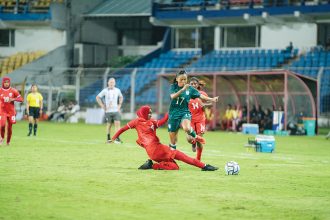
Informal football grounds and open ‘maidans’ too are increasingly replaced by private turfs rented by the hour. Access now depends on your wallet and your WhatsApp group size. “We have to book these grounds for Rs. 800 or Rs. 1,000 an hour,” says Aditya Prabhu, 22, a commerce student who plays five-a-side football. “So we have to gather enough people to split the cost. If not enough show up, the game is off. You can’t just go alone and kick a ball. And they use artificial grass to make it look nice, but it’s hard. If you skid or fall, it really hurts.” Even play, it seems, has become
a subscription service.
Older residents remember a different rhythm. Village markets, ‘mands’, church squares and wells once functioned as natural meeting points. “The ‘mand’ in the village, the tinto market space, khazan area, sluice gates and even the area near the cowshed became social nodes. Nothing was designed as a ‘hangout’, yet everything worked as one,” says D’Silva. Those organic third spaces are fading as new developments replace them with parking, shops or private compounds.
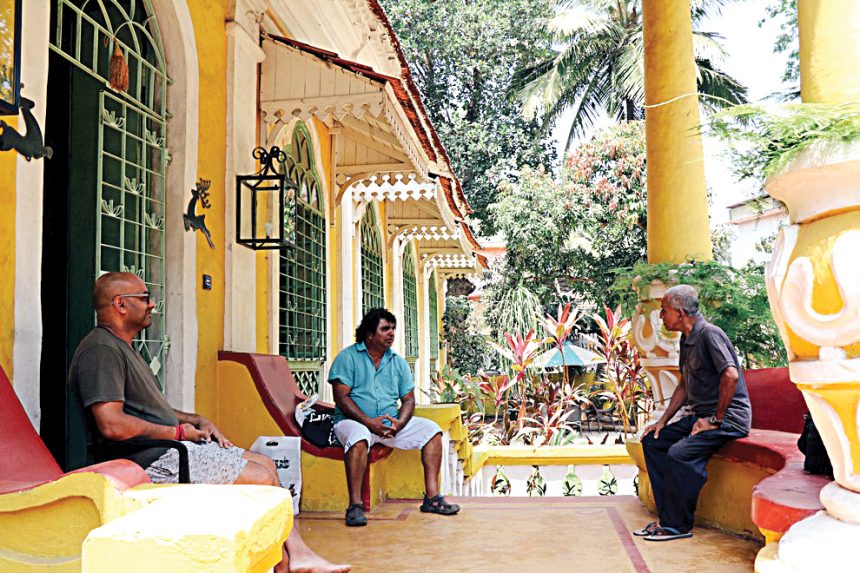
D’Silva points out that Goa already has its own quintessential version of the third space built into its homes. “The ‘balcao’ is the original Goan social space,” she says. “It was never just an architectural feature. It was where neighbours stopped to chat, where elders watched the street, where children played under someone’s eye. It blurred the line between private and public life. You could belong to the community without spending a rupee. That’s exactly what our towns are missing now. We’ve replaced these soft, welcoming edges with compound walls and gates.”
For 68-year-old Lourdes Fernandes from Saligao, those memories are still vivid. “Every evening we sat on the ‘balcão’ after tea,” she says with a laugh. “Someone would pass by and join us, then another. We talked about everything, weddings, gossip, fish prices, politics. Nobody planned it. It just happened. Now everyone is inside with the TV or phone. The streets feel empty now.”
The beaches, long considered Goa’s great equaliser, are no longer the easy commons they once were. “Beaches used to feel like public spaces, but now they feel crowded or regulated,” says Melwyn Pereira, a retired bank employee. Shacks, parking fees, policing and seasonal restrictions chip away at that sense of openness. You are either a customer or you keep moving.
For younger people, the squeeze is sharper. “If you don’t have money that day, you basically don’t socialise,” says Harsh Shetye, 19, an engineering student. It is a blunt summary of a growing reality. No cash, no company.
Meanwhile, the basics are missing. There are too few benches. Too little shade. Hardly any car-free streets. Libraries exist but are often poorly maintained. Access to parks is limited by traffic and safety concerns, especially for children and women. In a state where temperatures regularly soar, the lack of trees and covered seating makes outdoor lingering uncomfortable, if not impossible.
One recent exception is the swalkway by the river near Kala Academy, along the Mandovi Riverfront Promenade. In the evenings, the walkway fills with walkers, children on bicycles, elderly couples on benches and students simply staring out at the water. It is one of the few places in Panaji where you can do absolutely nothing and still feel like you belong. If maintained well, it offers exactly what a third space should, open, breezy and democratic. But its popularity is also telling. Because there are so few such options, the promenade gets uncomfortably crowded, especially on weekends, turning quiet leisure into a shuffle.
Some communities are trying to fill the gap themselves. Art collectives host pop-up exhibitions in borrowed halls. Clubs organise reading circles and music nights. Students gather on plateaus or quiet beach stretches, creating their own temporary third spaces. But these are improvisations. They depend on permission and luck. They disappear as quickly as they form.
D’Silva argues that the solutions do not have to be grand. “Simple, climate-sensitive design would make a huge difference,” she says. “Shaded seating, walkable streets, small neighbourhood parks, functional libraries, open plazas. Spaces that are free and easy to use.”