

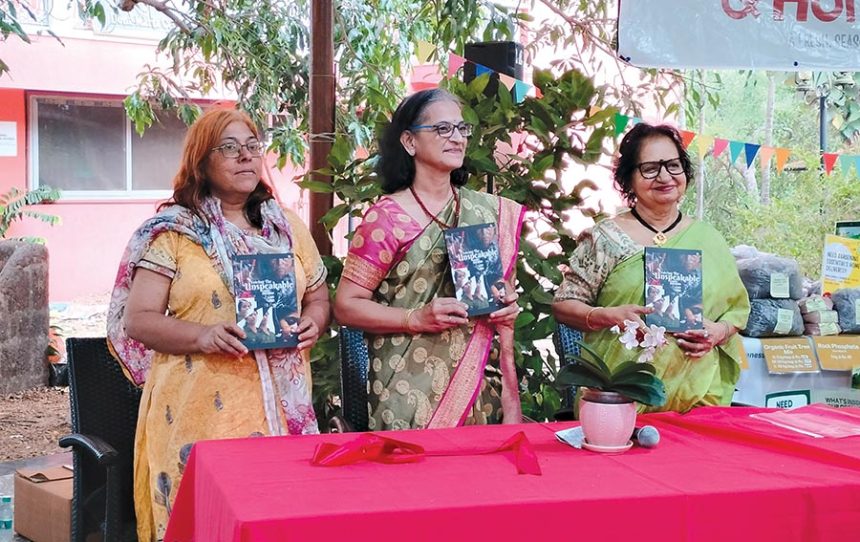
Auda Viegas’ fourth book ‘Voicing the Unspeakable’ is a collection of real life stories of women and children she has worked with and reveals the grim reality of the state we live in today
DIANA FERNANDES | NT NETWORK
The name Auda Viegas has become synonymous with women’s rights. Indeed, for the last 35 years, Viegas has been working tirelessly with vulnerable groups that have experienced persistent abuse and injustice. Her new book ‘Voicing the Unspeakable’ stands testimony to the work she has done, and documents some distressing real life stories of women, children, adolescents and even men who have faced sexual abuse and assault, exploitation and injustice.
“These stories have to be told because these are things that are happening behind closed doors,” she says, adding that she has also included three stories of men who were murdered by women. “I felt that society needs to understand what’s going on.”
Putting the book together took her three years. Some stories have been written as Viegas’ experience while some are written from the perspective of the victim like the eight year old boy who was raped by a man and the trauma he went through.
“This book mirrors my dedication, commitment and unwavering support to women and children. It’s been a long struggle from the time I stepped into my mission. This work after my earlier ‘Diary of a Servant’ is a narration of struggles to succeed in our goal for equality, justice and human rights. I always wish for a change to the antiquated societal mindset, bit by bit,” she says.
Viegas began her work in 1992, with a place for women to come and share their problems and work to solve them. “Relieving yourself of your burden is like half the healing taking place,” she says. There were cases where women were thrown out of their homes and Viegas helped them with the process of the law from pre-trial to post-trial.
“There are protective laws for women, but even in the courts it’s a horrible battle for women and justice often doesn’t come easily. We speak to people about the law and tell them everything is going to be fine but it’s not,” she says.
Viegas now runs the Bailancho Ekvott NGO as well as the one stop crisis centre And through the narratives of the book, she wants to send a message to the society as a whole, that change should begin from home.
“We have to stop stigmatising the victim. I’ve stressed on the woman’s role in this as well because I think the mother is more sensitive, more empathetic, more understanding and it is a mother who can groom her boy better,” explains Viegas, adding that education for both the boy and girl child should start at home. “The boy should learn to respect the dignity and the body of a woman and the rights of a woman while the girl should be able to make her own choices. If she isn’t even allowed to decide on her clothes how is she going to know what’s wrong and right? So mothers and fathers have to sit down, talk to their children, and give them the right thoughts, the right attitude,” says Viegas.
Recalling her own childhood days, Viegas shares that she used to be decorated like a doll and told not to speak out, but with time and experience, she also realised that she needed to raise her voice or else things would not happen. “Teach your girls to fight for their rights and file complaints,” encourages Viegas.
In her work so far, Viegas also reveals that one of the biggest challenges that she has faced when fighting for children was the lack of cooperation from the parents. “They don’t want their child to talk about what happened to them and because of that the whole case just flops out. They think about honour. When your daughter is already robbed of her honour, what honour are we talking about?” she says.
But the buck doesn’t just stop at the home. Viegas also advocates for changes in schools and among lawmakers to strengthen existing laws, all of which she also covers in the book.
“Our education has failed, our parenting has failed, our social attitude has failed,” she says.

