The Serendipity Arts Festival, South Asia’s interdisciplinary arts platform for creative cultural expression, returns for its 11th edition from December 13 to 20, in Panaji. Continuing its long-standing curator-led approach, the 2026 edition brings together a tightly selected group of practitioners whose practices are deeply rooted in inquiry, experimentation, and collaboration.
The Visual Arts programme will be led by Latika Gupta and Sheba Chhachhi, whose practices bring together rigorous art historical inquiry and politically engaged lens-based work. Gupta is an art historian and curator whose work engages with pedagogy, institutional practice, and contemporary art discourse while Chhachhi is an artist and curator known for her lens-based works that investigate contemporary questions about gender, the body, the city, cultural memory and eco-philosophy, through intimate, sensorial encounters.
In the Craft section, Kshitij Jalori and Sudheer Rajbhar will bring distinct yet complementary perspectives – bridging design innovation with grassroots material practices. Fashion and textile designer Jalori is known for his structural mastery of Banarasi weaves, and his embroideries which serve as a bridge between traditional handcraft and global luxury while Rajbhar is an interdisciplinary artist, designer, and social entrepreneur renowned for founding CHAMAR a sustainable fashion brand that reclaims the derogatory term “chamar” and transforms it into a symbol of pride and craftsmanship.
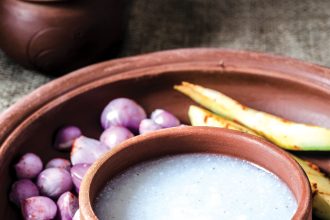
The Culinary Arts vertical will be curated by Anisha Rachel Oommen, the founder Goya, a publication operating at the intersection of culture, community, and media, using food as a medium to tell stories and create lasting cultural platforms that spotlight regional cuisines, local producers, and the knowledge systems that sustain them.
The Music segement at the festival will be shaped by Padma Shri award-winning Carnatic vocalist and composer Aruna Sairam and Ankur Tiwari, a leading singer-songwriter and composer, Recording Academy voting member and the former creative architect of the Coke Studio Bharat.
The Dance programme, curated by Ashley Lobo and Surjit Nongmeikapam, will explore the body as a site of both discipline and disruption. Lobo is a noted figure in the contemporary dance field and a pioneer of formalised Western dance education in India. His four-decade career spans performance, choreography and pedagogy, with over 40 film and stage works presented in India and internationally. Nongmeikapam meanwhile is choreographer, performing artist, cultural practitioner and artistic director of the Nachom Arts Foundation, whose work reimagines traditional performance frameworks through contemporary movement.
The Theatre programme will be curated by Mahesh Dattani and Anuradha Kapur. Dattani is the first playwright writing in English to receive the Central Sahitya Akademi Award while Kapur is a theatre-maker, teacher, curator and founder-member of Vivadi.
Accessibility, an integral and evolving focus of the festival, will once again be led by Salil Chatturvedi, a writer, poet, and disability rights campaigner, who has also represented India for wheelchair tennis, and in 2009 sailed from Mumbai to Goa with a team to draw attention to accessibility issues.
Finally, Special Projects, curated by Sreyansi Singh and Padmini Chettur, will act as a connective thread—bringing together cross-disciplinary explorations that push the boundaries of how art is encountered.
Singh is a curator and researcher who critically engages with contemporary textile art and clothes-making practices in South Asia. Her curatorial advocacy lies in foregrounding underrepresented and experimental approaches that inquire into the material histories and politics of the maker. Meanwhile dancer Chettur has redefined contemporary dance vocabularies in India.
Together, the curatorial cohort reflects a shift towards a more deliberate, research-led approach where each discipline informs and expands the other.
Commenting on the festival’s continued evolution, founder patron of the Serendipity Arts Sunil Kant Munjal says, “As Serendipity enters its second decade, our ambition is not only to present art but to shape how it is experienced, shared, and understood. The curators are central to this — they bring deep expertise, but more importantly, a spirit of inquiry that keeps the festival restless, questioning, and alive to its times.”
Speaking about the curatorial body for 2026, director of the Serendipity Arts Smriti Rajgarhia shares, “Curators at Serendipity Arts are not just programme-makers; they are critical voices who shape how audiences experience, understand, and question the arts today. Our 2026 cohort has been brought together with a clear intent — to push interdisciplinary dialogue further, create room for slower and more layered engagement, and tell sharper, more intentional stories across the festival.”