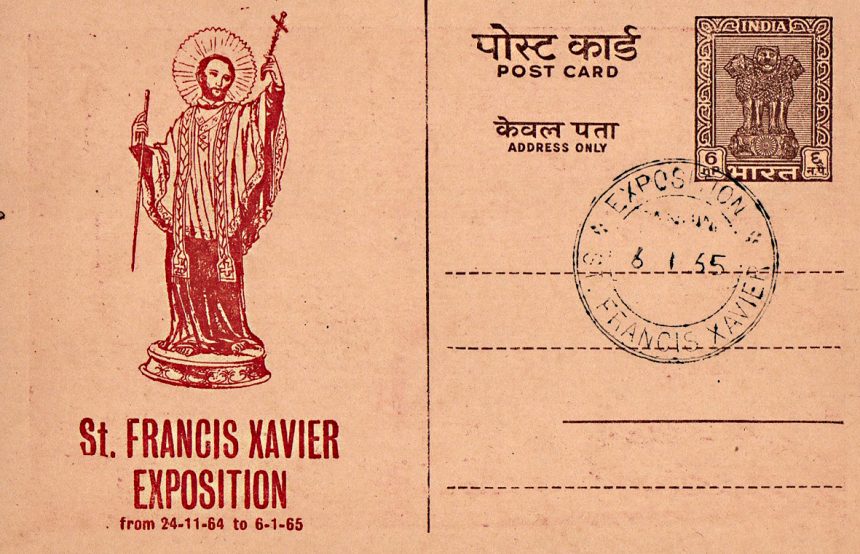
The ongoing exhibition at the Philatelic Bureau in Panaji uses stamps and postal history to highlight how philately can preserve the state’s collective cultural memory
VINIKA VISWAMBHARAN | NT BUZZ
Tiny stamps carrying stories of Goa’s saints, scientists, freedom fighters, festivals and food traditions have come together at the ‘5 Frames Philatelic Exhibition’ currently on display till June 2, at the Philatelic Bureau in Panaji.
Organised on the theme ‘Goa’s Culture and Heritage through Philately’, the exhibition forms part of the Goa Statehood Day celebrations and presents a visual archive of the state through stamps, special covers, cancellations and postcards. Curated by former president of the Goa Philately and Numismatics Society Dr. M. R. Ramesh Kumar, the showcase draws from decades of collecting and research.
“Each stamp tells a story,” says Kumar. “If you carefully observe stamps, you can learn about geography, science, politics, culture, wildlife and history. Philately is one of the best educational tools.”
Spread across five frames consisting of 80 display sheets, the displays include stamps and covers dedicated to St. Francis Xavier, Shenoi Goembab, Tristão de Bragança Cunha, Deenanath Mangeshkar, D. D. Kosambi and fashion designer Wendell Rodricks.
It also features Goa Carnival, São João, dekhni dance, tiatr, Tambdi Surla Temple, St. Augustine Tower, the Ponte de Linhares Bridge and beaches.
His intention, says Kumar, a retired chief scientist at the National Institute of Oceanography, was to present Goa through themes that ordinary people immediately connect with. “People know Goa for beaches and tourism, but Goa is much more than that,” he says. “We have scientists, freedom fighters, musicians, literature, biodiversity, cuisine and traditions that deserve recognition.”
One section showcases geographical indication products such as bebinca, Goan khaje, cashew feni and Harmal chillies, while another focuses on Goa’s state symbols including the gaur, ruby-throated yellow bulbul and Malabar tree nymph butterfly.
The exhibition also revisits Goa’s liberation movement through philatelic material released during the silver, golden and diamond jubilees of Goa Liberation. A section dedicated to underground broadcaster Libia Lobo highlights her ‘Voice of Freedom’ radio transmissions during Portuguese rule.
Kumar says the philatelic community in Goa has not grown substantially despite efforts to attract younger collectors through innovations such as augmented reality cancellations, philatelic passports, presentation packs and permanent pictorial cancellations. But he believes exhibitions like these are especially important at a time when younger generations are increasingly disconnected from hobbies involving reading and observation. “Today there is too much distraction from social media,” he says. “People earlier had engaging hobbies. Philately teaches patience, curiosity and creativity.”
In fact, one of the most engaging parts of Kumar’s outreach is his effort to reconnect students with letter writing through postcards. During science and philately talks in schools, he encourages children to visit a nearby post office from wherever they are from, buy a postcard and write a letter either to him, their teacher or principal. “Many children today have never seen a post box or written a letter,” he says. “When they post a card for the first time, it becomes an experience.”
According to him, philately is not just about collecting stamps. “It is about preserving stories, culture and memories,” he says. “If even a few young people walk out of this exhibition with curiosity about Goa and a desire to start collecting, then the effort is worth it.”