

Dr. Suresh Shanbhogue
The technology has created revolution in different spheres at a significant speed and scale and has transformed every aspect of human life. The rapid growth of digital systems, automation, artificial intelligence, communication network and scientific innovations has brought an unprecedented and irreversible change across various sectors.
This revolution has improved efficiency, productivity, connectivity and quality of life. It has also changed the way people work, communicate, learn, travel and receive health care and education.
The most visible impact is considerable penetration of mobile phones, UPI payment platform and various other technological interventions in daily life of a common man. This has proved that there is no significant correlation between educational level of a person and adoption of technological advancement.
Globally, smart meter adoption in energy sector is well advanced in many developed countries and steadily progressing in developing countries. Smart metering also fit directly in to the broader agenda of UN Sustainable Development Goals (SDGs) as it improves energy measurement, management and conservation.
Towards achieving the national goal of Viksit Bharat@2047, the energy sector needs to transform towards modern electricity systems that use digital communication to improve efficiency, reliability and energy management.
The union government has launched Smart Meter National Programme (SMNP) under power sector reforms for large scale replacement of conventional electricity meters with smart meters, focusing on reducing gap between power purchase cost and actual revenue realized from electricity consumption and ensure digital billing and remote monitoring.
Though change is inevitable, it is human tendency to remain complacent in one’s comfort zone and resist change. Many a time resistance is due to lack of understanding, unfounded fear, ill-informed opinions and motivation to oppose everything as a political stance. Therefore, it is necessary to understand the difference between the conventional meters and the smart meters.
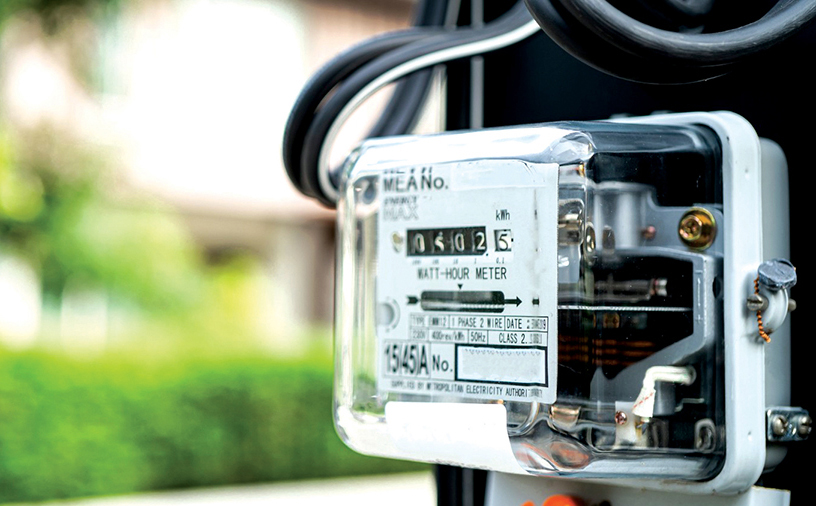
The conventional meters are site specific requiring physical inspections and periodic visits by the meter readers for manual meter reading. This practice is prone to delayed readings, human errors, generation of estimated bills due to lack of access to the meters or their malfunctioning, tampering of meters and theft of electricity due to illegal connection. Presently, non-availability of electricity of supply to a particular area will be known to the electricity department only if the consumers complain.
But smart meters function on a digital platform having remote monitoring capability for automatic transmission of meter readings, digital billing, real time management of electricity consumption, management of transmission and distribution losses and detect electricity thefts.
Smart meters can provide more accurate bills reducing billing disputes. It will help the consumers to monitor electricity usage more frequently, help identify high-consuming appliances and manage energy consumption and try to reduce electricity bills. Smart meters can automatically notify any outages, help locate faults quickly and reduce restoration time of electricity supply.
In India, there is no exclusive legislation for smart meters and they are enabled and regulated through a combination of electricity law, rules and regulatory orders. The Section 55 of the Electricity Act 2003 mandates that no electricity supply can be provided without a correct meter.
Therefore, smart meters being more accurate than the traditional meters the replacement is justified. The Section 47 of the Act empowers collection of security deposits or advance payments from the consumers, which supports implementation of pre-paid smart meter system.
Under the Indian Constitution, electricity falls under the concurrent list empowering both State Legislatures and Parliament to make laws on the subject. With regard to constitutional provision smart meter policy may broadly be seen from the lens of Article 14, Article 19 (1)(g) and Article (21). Basically, Article 14 mandates equality before law. It prohibits arbitrary, unreasonableness or unequal treatment by the State.
As long as smart meter policy is applied uniformly without any discrimination and undue disadvantages, room for any doubt on constitutional violation under Article 14 is minimal. Article 19(1)(g) guarantees all the citizens the right to practice any profession, or to carry on any occupation, trade or business.
Therefore, a relevant question would be whether smart-meter policy materially affects a person’s business or occupation. An argument is that imposition of pre-paid meters may put inconvenience to small businessmen and even common citizen. It is feared that any sudden disconnection of electricity supply due to insufficient balance or failure to recharge would impact daily life. This immediately affects the citizens ability to earn daily bread impacting the right to livelihood protected by Article 21. However, to put this fear to rest, the centre has recently clarified in the Parliament that prepaid smart meters are not mandatory.
Goa has already rolled out installation of smart meters. The State has over 7 lakh electricity consumers, of which nearly 80 per cent being domestic consumers. Presently, the state is not forcing the consumers to compulsorily install smart meters and pre-paid metering is made optional. The power minister has recently indicated that more than one lakh smart meters have already been installed. But the consumers have complained significant increase in power consumption bills post installation of smart meters.
The increase in power bill is mainly attributed to penalty provision for electricity consumption beyond the sanctioned load. As a positive response, the Chief Minister has put on hold the smart meter installation to resolve the matter in consultation with the consumers. The government has expressed willingness to increase the sanctioned load and waive the penalty provision or adjust the penalty already paid in future bills. Thus, the government has indicated that consumers’ concerns will be taken into account in implementation of smart
meter installation.
The writer is a retired senior bureaucrat.

