

Shahin Bepari Lambe
Panaji
With the aim of channeling used cooking oil for biodiesel production, the state government has proposed a first-of-its-kind framework to plug gaps in the collection and digital traceability of used cooking oil (UCO) in Goa. The will ensure that the oil is collected through authorised channels and eventually channelled for biodiesel production.
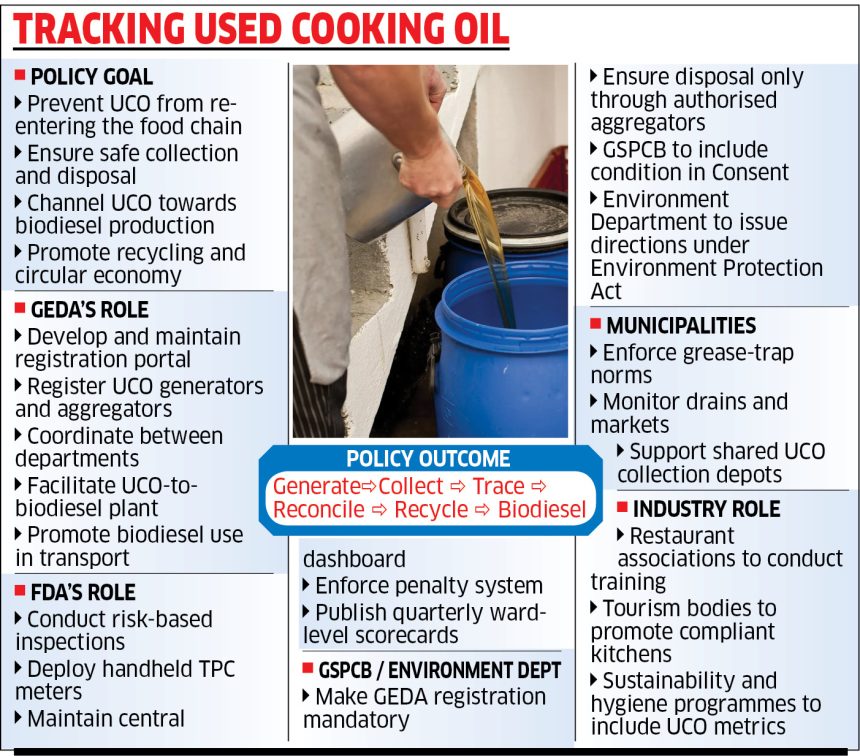
“The proposed Policy Framework for Management of Used Cooking Oil for Reuse as Biodiesel seeks to prevent UCO from re-entering the food chain, promote its recycling and establish a transparent system for tracking its movement from food establishments to authorised aggregators and recycling facilities,” said a source from the department.
The framework proposes a five-pillar approach comprising standard operating procedures, risk-based inspections using handheld Total Polar Compounds (TPC) meters, QR-based digital traceability, incentives and penalties, and tighter oversight of UCO aggregators.
“Under the proposed system, food establishments generating UCO would be registered on a portal developed and maintained by the Goa Energy Development Agency (GEDA). They will have to hand over used oil only to authorised aggregators registered on the portal,” states the policy framework.
The Food and Drug Administration (FDA) would conduct risk-based inspections using handheld TPC meters to check the quality of cooking oil. The framework provides for a TPC limit of less than 25% for oil in use, in line with the standards prescribed by the Food Safety and Standards Authority of India (FSSAI).
Every collection of UCO by an authorised aggregator would be recorded through a QR-based, geo-tagged electronic receipt. The proposed dashboard would reconcile the quantity of oil generated by an establishment with the quantity collected by an aggregator. Discrepancies between the oil collected and the quantity eventually supplied to a biodiesel plant would be flagged for audit.
The policy also proposes incentives for compliant establishments and penalties for violations. A proposed ‘Freshly Fried’ recognition system would allow consumers to check an establishment’s latest TPC test result and its UCO disposal record through a QR code.
GEDA would act as the nodal implementing agency and facilitate the establishment of a UCO-to-biodiesel plant and its use in the transport sector. The framework also envisages coordination among the FDA, Goa State Pollution Control Board, Environment Department, municipalities, FSSAI and industry associations.
The policy would
come into effect from the date of its notification in
the Gazette.

