Inês Gonsalves’ decade-long photographic record returns to Goa, capturing a place in the midst of change
VINIKA VISWAMBHARAN | NT BUZZ
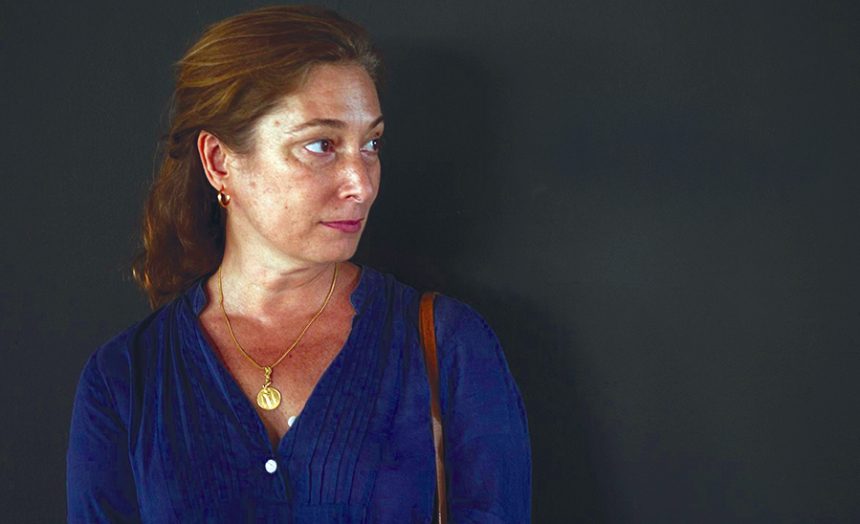
Photographs taken in Goa between 1994 and 2004 return to the state this week in ‘Still / Goa: A Place in its People’, an exhibition by Portuguese photographer Inês Gonsalves. It is curated by Leandre D’Souza and presented by Sunaparanta Goa Centre for the Arts and The Consulate General of Portugal in Goa, in collaboration with CLP Instituto Camões and Fundação Oriente-Delegation in India.
The exhibition records a decade of homes, streets, rituals, landscapes, and the people who inhabited them.
Looking at the images now, Gonsalves says she sees something she was not consciously trying to create at the time. “I was simply photographing what was in front of me: people, houses, gestures, rituals, streets, landscapes,” she says. “But photography has this extraordinary capacity to turn an ordinary moment into a record of a particular time.”
The exhibition brings those moments back into view more than two decades later. Some of the people Gonsalves photographed are gone, some places have changed and certain ways of living have become less visible. “The photographs have therefore acquired another meaning,” she says. “They are no longer only my memories of Goa. They have become fragments of a collective memory.”
Gonsalves first came to Goa in the early 1990s and was struck by its distinct yet familiar character. When she later met Portuguese writer Catarina Portas in Lisbon, they realised they shared the same curiosity about the place. Their collaboration eventually led to the 2001 publication ‘Goa, História de um Encontro’, or ‘Goa, A Story of an Encounter’, combining photography and text to explore Goa’s architecture, traditions, everyday life and Portuguese influences. “To us, Goa felt completely different from the rest of India, and yet strangely familiar,” says Gonsalves.
That sense of familiarity drew Gonsalves and Portas into a deeper exploration of the state. “What began as curiosity gradually became a much longer investigation, and photography became my way of looking, listening and trying to understand,” explains Gonsalves.
She adds that she kept returning over the following years because Goa continued to reveal new layers. “Every time I came back, I discovered another person, family story, house, ritual. It was not a place I felt I could understand in one visit.”
Her camera turned towards the ordinary. Homes, kitchens, courtyards, family photographs, religious celebrations, and the ways people gathered together became part of an attempt to understand how the past continued to exist in everyday life.
“We wanted to understand the present, and gradually realised that the present could not be understood without looking at the past,” says Gonsalves. “So ‘the everyday’ became our way into history.”
The people Gonsalves encountered during her visits were equally important in shaping her understanding of the place. She and Portas met writers, priests, historians, teachers, artists, cooks, freedom fighters, shopkeepers and families, whose experiences often challenged their own assumptions.
She recalls that what they heard did not always fit into a single narrative. “Listening to different accounts revealed how many different memories could coexist in the same place”, she notes.
The experience also led Gonsalves to confront Portugal’s own colonial past differently. Growing up in a democratic Portugal, she says the country’s colonial history had not been something she had learned to examine deeply. “Meeting Goans who had very personal memories of Portuguese rule, and then listening to their different perspectives, made that history much more real to me,” she says. “That changed the way I looked, both at Goa and at Portugal.”
The photographs were also taken at a time when Goa was undergoing rapid change. Tourism, economic development, and greater contact with the outside world were already reshaping the state, while certain community-based ways of living appeared increasingly fragile. Portugal’s Consul General in Goa, Ambassador Manuela Franco, sees that transition as one of the reasons the photographs resonate today. “Twenty years is long enough that change stops feeling like change, until a photograph reminds you that the road you take every day used to look different,” she says.
The exhibition also creates another point of contact between Goa and Portugal, although Franco is careful not to define its significance primarily through diplomacy. “This body of work matters on its own terms, as art, full stop, before it takes on any diplomatic meaning or significance,” she says.
What interests her is the attention Gonsalves brought to the place. “Someone really looking at a place closely, and letting it touch them; that’s the most direct version of the Portuguese-Goans relationship there is.”
She hopes the exhibition also offers a reminder that the relationship between Goa and Portugal is not confined to the past. “What connects us isn’t stuck in the 16th century. It’s what happens when people actually pay attention to each other, today.”
And if Gonsalves were to photograph Goa again today, she says she would still be interested in the relationship between change and continuity. “To me, this has always been a place of encounters and adaptations, so I would want to see what has changed and what, despite everything, has remained.”
This exhibition, she continues, is not only about a photograph holding a moment in time. It is also about persistence. “Goa has changed enormously, but some things continue, sometimes visibly, sometimes beneath the surface,” she says. Franco, meanwhile, does not think audiences need to search for a larger message in every photograph. “Mostly, I hope people simply enjoy beautiful photographs of a place they cherish,” she says. “If it also makes someone pause at a crossroads shrine they’ve walked past a hundred times, even better, but that’s a bonus, not the point.”
(‘Still / Goa: A Place in its People’ opens on August 21 at 6.30 p.m. at Sunaparanta Goa Centre for the Arts, Altinho. It will remain open until October 24)