NT Reporter
Panaji
Facing a 49 per cent shortage of green fodder, the state government has notified a Fodder Resources Development Plan proposing around 10,000 ha under fodder crops to improve availability and reduce dependence on supplies from outside the state.
The notification was issued by Director of Animal Husbandry Dr Nitin Naik
on Thursday.
A pilot programme will be implemented in North and South Goa covering 10 villages. It will include farmer training, field demonstrations, planting material, micro-irrigation and custom hiring centres.
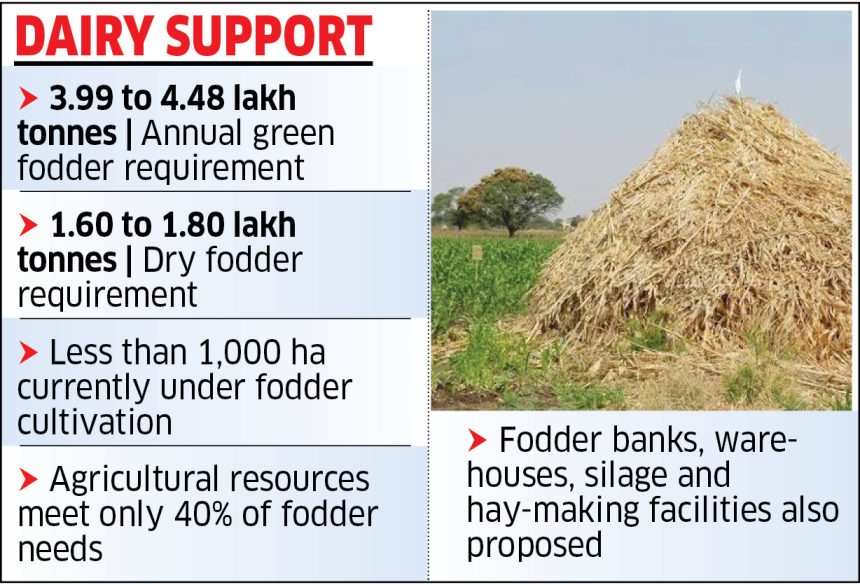
Goa’s estimated green fodder requirement is 3.99 to 4.48 lakh tonnes, while its dry fodder requirement is 1.6 to 1.8 lakh tonnes.
The plan proposes fodder banks, warehouses, silage and hay-making facilities, besides promoting alternative resources such as moringa, azolla and hydroponic fodder.
According to the plan, less than 1,000 ha is currently under fodder crops, while agricultural resources meet only about 40 per cent of the dairy industry’s green and dry fodder requirement. The state has a 50 per cent deficiency in dry roughages and a 93 per cent deficiency in concentrate feed.
The plan proposes bringing 5 per cent of the state’s cultivated area under fodder crops. With cultivated land estimated at 1.58 lakh ha, 5 per cent would amount to about 7,900 hectares. Considering a cropping intensity of 1.22, the plan proposes about 10,000 hectares to ensure a more sustainable fodder supply.
Of this, around 5,000 hectares is proposed for perennial fodder crops, including Bajra-Napier hybrid, guinea grass and perennial fodder sorghum. Another 5,000 hectares is proposed for annual fodder crops such as fodder maize, sorghum and cowpea.
The plan also seeks to use interspaces in cashew, coconut and other horticultural plantations for fodder cultivation.
It states that if 50 per cent of interspaces in fruit orchards are brought under fodder production, around 5 lakh tonnes of green fodder could be produced, potentially meeting Goa’s entire green fodder requirement.
The plan will be monitored and reviewed by the Goa Fodder Task Force, constituted by the government in December 2024.