Says Centre sanctioned Rs 16,440 cr since 2014
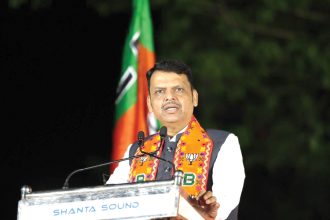
Panaji: Stating that the Centre has sanctioned road infrastructure projects costing more than Rs 16,440 crore for Goa since 2014, Chief Minister Pramod Sawant on Thursday sought continued support from the central government for key infrastructure projects in the state.
Sawant said that the construction of a new Borim bridge, Mollem-Sattari link, Banastari bypass, Sankhali bypass and improved pedestrian infrastructure are vital for strengthening connectivity and easing traffic across Goa.
He was addressing the inaugural session of the 237th Mid-Term Council meeting of the Indian Road Congress (IRC) at Dona Paula.
Union Minister of State for Road Transport and Highways Ajay Tamta was present on the occasion. Sawant said infrastructure development has become one of the highest priorities for both, the Centre and the state government. He claimed that Goa received inadequate financial support for road projects before 2014 when the Congress-led UPA was in power at the Centre.
“Whenever a nation progresses, the first sign of development is seen on its roads. Roads create economic growth and improve the quality of life. The Union government sanctioned 124 national highway projects in Goa between 2014-15 and 2025-26 involving an investment of more than Rs 15,860 crore,” Sawant said.
Besides these, 19 road safety projects worth Rs 378 crore and 18 projects under the Central Road and Infrastructure Fund (CRIF) worth Rs 202 crore were also approved, taking the total investment in Goa’s road infrastructure to over Rs 16,440 crore, the Chief Minister said.
Of this amount, more than Rs 7,240 crore has already been spent on executing projects, resulting in a major transformation of the state’s road network, Sawant said. “Goa has around 280 km of national highways, of which more than 126 km have already been upgraded to four-lane standards, while nearly 70 km are under construction or in the tendering stage,” he said.
According to the CM, projects such as the Atal Setu, the new Zuari bridge, Canacona bypass and the widening of NH-66, NH-748 and NH-566 have significantly improved connectivity, reduced travel time, boosted tourism and strengthened economic activity.
He said that major projects, including the Porvorim elevated corridor, four-laning of the Ponda-Bhoma and Bhoma-Old Goa stretches, and the Navelim-Cuncolim and Betul-Canacona corridors, are progressing at various stages.
Speaking on the occasion, Tamta said that the IRC forum brings together engineers and experts from across the country to discuss the future of road development and share best practices in infrastructure. Tamta also praised the state public works department for developing quality roads and bridge infrastructure.
Referring to the Atal Setu, he lauded the engineering behind the project, noting that the new bridge was built by constructing piers between two existing bridges.
The programmes at the IRC Council meeting include the Highway Research Board meeting, as well as a meeting of PWD Secretaries, Engineers-in-Chief and Chief Engineers.
The inaugural session also witnessed the release of IRC technical publications. Earlier, the Chief Minister inaugurated the Goa Pavilion at the event, which is organised by the Indian Roads Congress in association with the public works department.
Centre clears Borim bridge project worth Rs 400-500 cr
Panaji: The Centre has cleared the Rs 400 crore-Rs 500 crore Borim bridge project, wherein a new bridge would be constructed on River Zuari at Borim in Ponda taluka.
This information was provided by Public Works Minister Digambar Kamat at the backdrop of the 237th Mid-Term Council meeting of the IRC on Thursday. Kamat announced that the Porvorim six-lane elevated flyover is expected to be inaugurated on the eve of Ganesh Chaturthi, this year.
In his speech, he also said that Goa’s bridges are iconic landmarks that represent the state’s engineering excellence and development, and are more than just concrete structures.
Highlighting projects such as Atal Setu, Kamat said that these bridges have become symbols of pride for both, residents and tourists.