

Abdul Wahab Khan
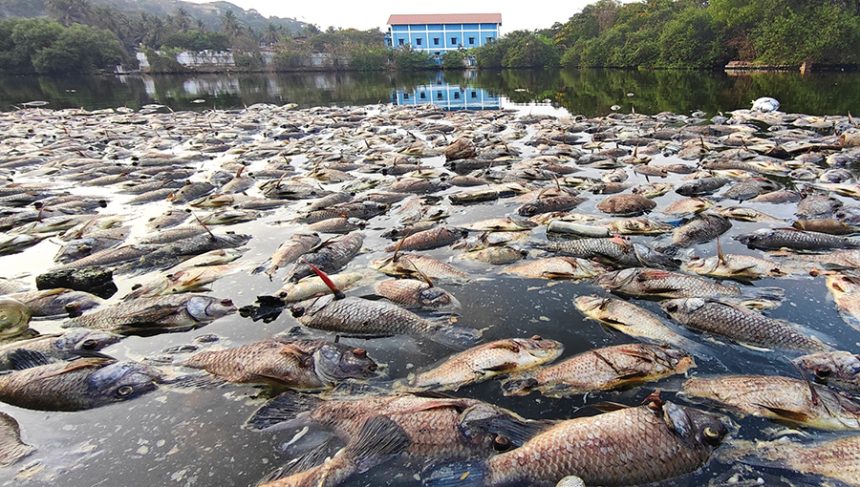
Panaji: Following a sudden and large-scale fish mortality at Mala Lake, Goa State Pollution Control Board (GSPCB) officials conducted a site visit on Saturday evening and collected water and fish samples for laboratory analysis to determine the cause of the incident.
The samples have been sent to the Board’s laboratory at Saligao for analysis.
“Samples have been collected and are being analysed. Only after scientific assessment can we determine the precise cause,” a senior official said.
Sources said preliminary observations indicate that the fish kill could be linked to a drop in dissolved oxygen levels, which may be caused by organic pollution, algal blooms, or the influx of untreated waste. Eyewitnesses said a strong and unpleasant odour was emanating from the water.
Interestingly, the GSPCB’s scientific section said that Mala Lake does not figure among the 39 water bodies classified under Class E that are identified annually to assess the status of water quality in the state. Had the lake been included in this category, its water quality would have been monitored regularly in accordance with the Central Pollution Control Board’s prescribed criteria, based on its best designated use.
For lakes pertaining to Class E, the water is typically used for irrigation or industrial cooling rather than as a drinking source.
Topographically, the 16,000-square-metre Mala Lake was once part of the flood plains of the Rio de Ourem before human intervention and land reclamation cut it off, making it vulnerable to stagnation. Despite a Rs 5 crore beautification project launched in 2004 and its identification under the Smart City Mission for restoration, the lake has continued to face ecological issues.
Similar incidents have been reported in the past. In 2011, fish deaths were reported and were attributed to factors such as sewage inflow, stagnation, and seasonal changes affecting oxygen levels. Following earlier incidents, authorities had undertaken measures including periodic cleaning, aeration, and monitoring of waste discharge.

