

NT Reporter
Panaji
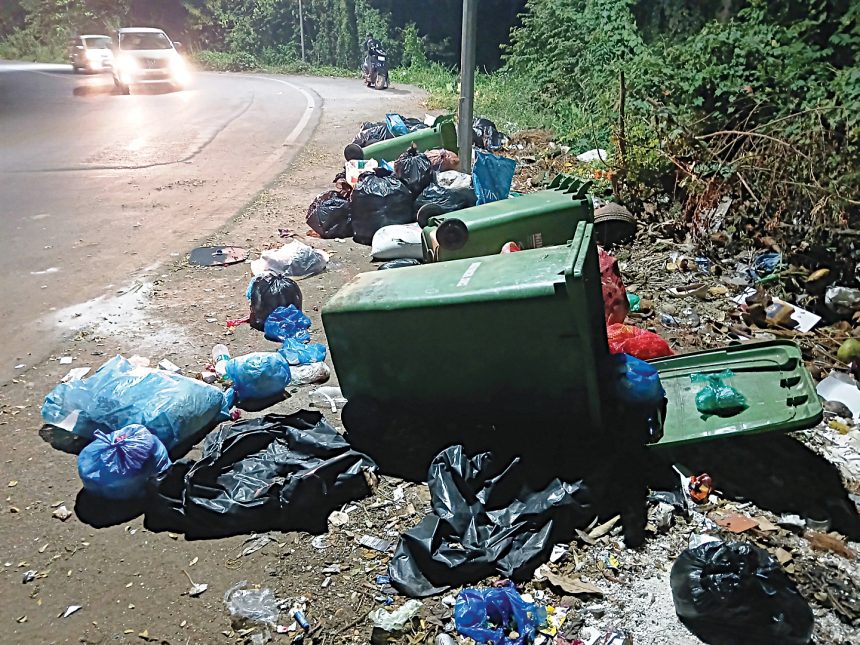
Managing Director of the Goa Waste Management Corporation, Harish Adconkar, said rampant roadside dumping was undermining the state’s highway cleaning programme while calling on panchayats to strengthen door-to-door collection systems.
“GWMC has been cleaning nearly 420 km of highways across Goa for the past seven to eight years, but the effort is repeatedly negated by illegal dumping. Waste often reappears at the same locations within hours,” said Adconkar, addressing a press conference jointly with the Goa State Pollution Control Board on Tuesday.
He said dumping typically takes place during late night and early morning hours, particularly near flyovers and isolated stretches, where offenders take advantage of limited surveillance.
“The issue was not the cleaning process but behavioural practices and weak enforcement at the local level. Notices have been issued to panchayats for failing to curb roadside dumping,” said Adconkar.
Stating that round-the-clock monitoring of highways is not feasible, he said GWMC has started an experimental initiative by setting up a manned waste collection centre at Assolna.
“Residents will have to bring segregated waste, which will then be scientifically processed,” he said, adding that similar centres are proposed at two to three locations in the coming months, he said.
Adconkar said panchayats are legally required to establish MRFs for segregation and baling of dry waste.
He appealed to citizens to segregate waste at source and avoid indiscriminate dumping.
“The handling of biomedical waste shows that compliance is possible when systems are properly followed,” said Adconkar.
Referring to increasing waste generation due to tourism, he said additional waste treatment plants are required.
At present, Goa operates two municipal solid waste treatment plants, at Saligao and Cacora. He said the Saligao plant has a normal capacity of 300 tonnes per day, while the Cacora plant processes 125 tonnes daily.
He said both plants generate electricity, with Saligao producing 1.3 megawatts and Cacora generating 0.8 megawatts per day.

