

Abulla Khan
Valpoi
The mounting waste problem in Valpoi is being driven not only by the volume of garbage generated but by changing consumption patterns linked to tourism.
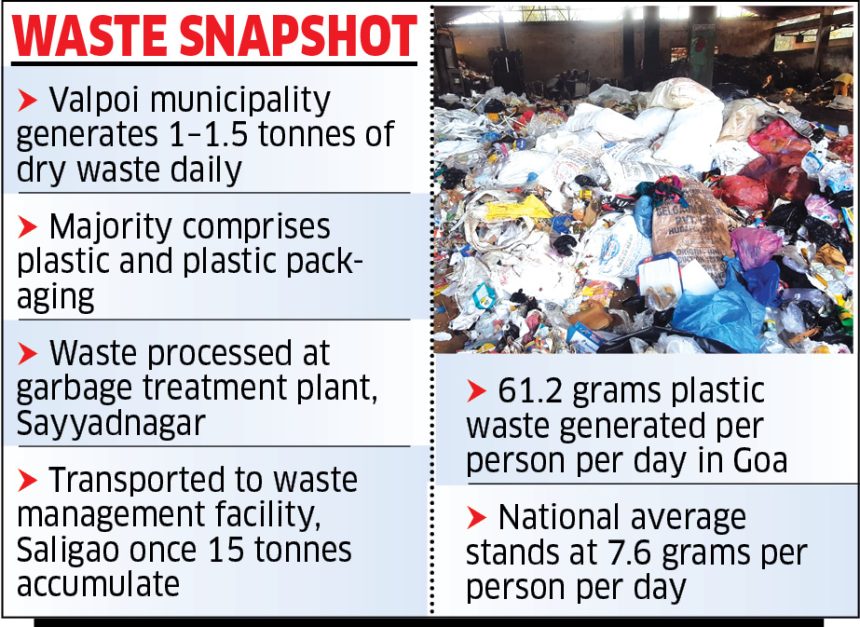
Valpoi Municipal Council (VMC), a Class ‘C’ civic body, generates between 1 to 1.5 tonnes of dry waste daily, most of it comprising plastic and plastic packaging.
“As tourists increasingly move from beaches to hinterland destinations, interior areas are witnessing a sharp rise in litter. Plastic bottles, multilayered food packaging and discarded glass bottles are now frequently found along forest trails, waterfalls and market areas,” said municipal officials.
Collected waste is processed at the garbage treatment plant in Sayyadnagar and transported to the Goa Waste Management Corporation facility at Saligao once it accumulates to 15 tonnes.
The local challenge reflects a wider statewide concern. Goa generates nearly 800 tonnes of municipal solid waste per day, of which around 45 per cent is non-biodegradable.
Plastic packaging forms a significant share. On a per capita basis, the state produces approximately 61.2 grams of plastic waste per person per day — significantly higher than the national average of about 7.6 grams — largely due to heavy tourist inflow and associated packaged consumption.
In 2025, Goa recorded approximately 1.08 crore tourist arrivals against a resident population of about 15 lakh. This seasonal surge substantially increases consumption in public spaces, including beaches, highways, forest belts and hinterland destinations such as Valpoi.
Unlike household waste, litter in high-footfall public areas is difficult to manage through routine collection systems. A growing concern is injuries caused by broken glass bottles discarded in public spaces.
The issue was raised in the Goa Legislative Assembly in July 2025 following complaints of visitors being injured by glass shards along popular coastal stretches.
Experts said that while clean-up drives remove visible waste, they do not change disposal behaviour at the point of consumption. As a corrective measure, a Deposit Refund Scheme (DRS) has been proposed, recommending a refundable Rs 10 deposit on alcoholic glass bottles, to be returned when bottles are brought back intact.
“As a corrective measure our government must propose DRS like European nations, as studies show up to 54% cleaner environments in areas with DRS,” said one Indian expat working in Europe.

