Vasco: Residents of Velsao on Monday removed construction material allegedly dumped on their traditional access road by a contractor engaged by Railway Vikas Nigam Limited (RVNL), clearing the way to around 25 houses affected by ongoing double-tracking work.
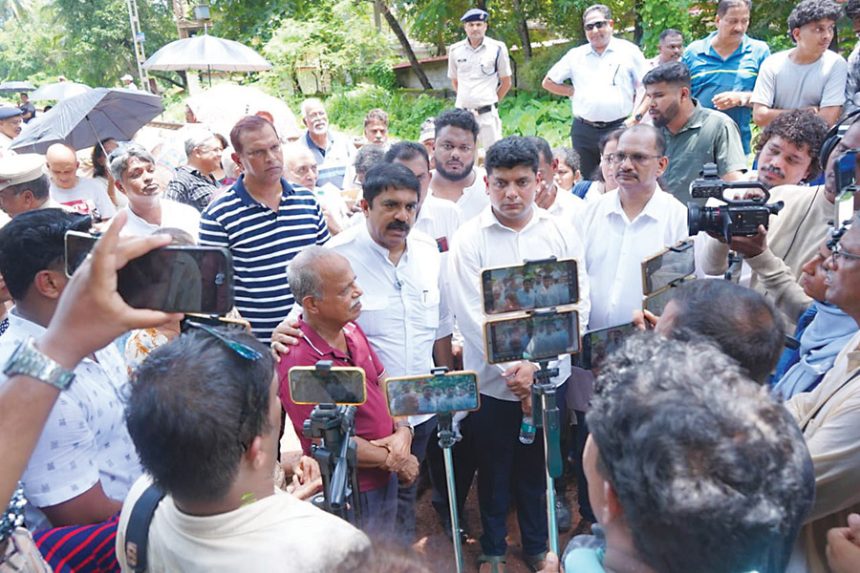
A large number of villagers, activists and political leaders gathered at the site following a request from affected residents, who alleged that the material had blocked proper access to their homes for several days.
Goa Forward chief and Fatorda MLA Vijai Sardesai, Congress leader Amit Patkar, former Cortalim MLA Alina Saldanha, local Congress leaders and activists reached the site and demanded that the work be stopped and access restored.
Police from Verna police station were deployed as tensions rose.
Mormugao Deputy Superintendent of Police Gurudas Kadam, the Deputy Collector and other officials also reached the site to maintain law and order.
Villagers questioned the officials over what they alleged was illegal work and said they were dissatisfied with the assurances given to them.
An excavator arranged by Patkar was subsequently brought to the site.
Sardesai and Patkar stood on the machine as it removed the stones and other material from the road.
The Goa Forward chief alleged the double-tracking work was being carried out illegally in the name of development and that the government was proceeding without acquiring the required land. He also questioned the absence of the local MLA when leaders from other constituencies had arrived to support the villagers.
He also alleged that most of the affected houses belonged to Christian families and added the government was ignoring their grievances because it did not expect their political support.
Patkar said people had faced hardship under the Pramod Sawant-led government for the past eight years and claimed that 46 families had lost access to their homes during this period due to various works.
Goencho Ekvot founder member Orville Dourado said the clearing of the road was a “victory of the people”.
The villagers said the double-tracking work was being carried out without their consent and demanded that their traditional access and land rights be respected.