PTI
Pachpadra (Rajasthan)
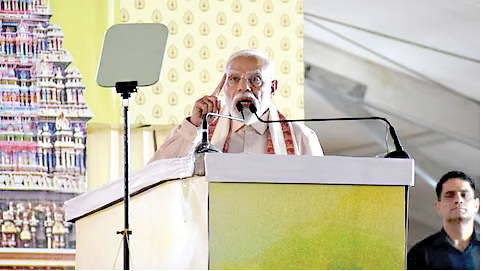
India successfully navigated one of the biggest global energy crises of the century through proactive policies, diversified fuel sourcing and strong diplomatic ties, with “minimal burden” on citizens, while major countries struggled, Prime Minister Narendra Modi said on Saturday.
Some forces were busy spreading fear in public and political games were played, but “they must be wallowing in the depths of despair today”, Modi said at a public meeting, asserting that the country’s handling of the situation would be remembered as an “unprecedented” chapter in history.
“The war in West Asia created the biggest energy crisis of the 21st century. Many powerful nations struggled with fuel shortages. India overcame this challenge because it took the right decisions at the right time, assessed the situation correctly, used its resources in a balanced manner and utilised its diplomatic strength positively,” he said.
Prime Minister Modi, who dedicated the country’s first greenfield integrated refinery-cum-petrochemical complex to the nation in Rajasthan’s Balotra area, lauded authorities for working tirelessly over the last two months to repair the project, where a major fire had occurred on April 20, forcing the postponement of its scheduled inauguration by the PM the next day.
On Friday, strong winds accompanied by rains damaged banners and hoardings at the refinery site ahead of the Prime Minister’s visit and workers were engaged since Saturday morning for the repairs.
PM said India has substantially expanded its refining capacity while several developed regions have failed to do so.
“The United States has not built a new refinery in the last 50 years. Europe’s refining capacity has continuously declined. India has now become the world’s fourth-largest country in refining capacity and this capacity will continue to grow,” he said.
The Prime Minister spoke about how LPG production was maximised, PNG connections increased and energy imports were sourced from more than 40 countries to overcome the
crisis and shield citizens in India from the worst impact of the crisis.
He said oil companies incurred losses of over Rs 75,000 crore between April and June due to rising global prices, but the government absorbed the burden.
“In several countries, diesel and petrol prices rose by 40 to 50 per cent and fuel was distributed through quotas. India did not witness such a situation even for a single day.
“Rumours were spread, people were frightened and political games were played, but those with wrong intentions did not succeed,” he said, apparently attacking the Congress and other opposition parties.
He noted the government was working round the clock at the policy and diplomatic levels to tackle the crisis. Every sensitive decision taken during that period will one day become part of history. What India achieved during this crisis is unprecedented, he said.
“Those who wished to see India fail had even begun making predictions. Their malicious intentions did not succeed,” he said.
Modi said nearly 70 per cent of India’s LPG requirement was met through imports and about 90 per cent of those supplies came from Gulf countries through the Strait of Hormuz. The conflict had nearly halted those supplies.
He said the government immediately decided to maximise domestic refining capacity for LPG production.
“Industrial gas production was shifted in favour of LPG production. Within seven days, refinery output of LPG increased significantly. During the crisis, LPG production went up by 54,000 metric tonnes. Refineries that had never produced LPG earlier were also reconfigured,” he said.
The government simultaneously ensured that PNG connections expanded rapidly so that domestic demand for LPG remained under control, Modi said.
“More than 11 lakh households were connected with PNG in a very short period. Domestic consumers were also protected from the burden of rising prices. Experts believed a domestic LPG cylinder could cost Rs 2,000. Today it is available at around Rs 950,” he said.
He said commercial LPG prices were also reduced substantially. Referring to petroleum products, Modi said crude oil prices had surged from about USD 70 per barrel to USD 120 per barrel after the conflict escalated and supply routes were disrupted.
He said India expanded energy imports significantly during the West Asia crisis.
“When the crisis began, India was importing energy from about 25-26 countries. During the crisis, we increased this to more than 40 countries,” he said, attributing the turnaround to India’s diplomacy.
On oil companies incurring losses, he said, “We reduced excise duty by Rs 10 per litre and ensured that the burden on citizens did not increase significantly.”
He said the country has become the world’s fourth-largest in refining capacity and continues to expand. He also credited his government’s long-term policies with overcoming global disruptions in fuel and fertiliser supply caused by the war between Iran and the US-Israel combine.
Talking about the refinery project, he said an agreement for the Pachpadra refinery project had been signed in 2017, but work slowed considerably during the previous Congress government in Rajasthan between 2018 and 2023.