

Agencies
Washington/Geneva/
Switzerland
Scientists fear the combined effects of El Niño and human-caused climate change could reshape weather around the world
UN warns of 80% chance of El Niño returning by August; risks for agriculture, water, energy
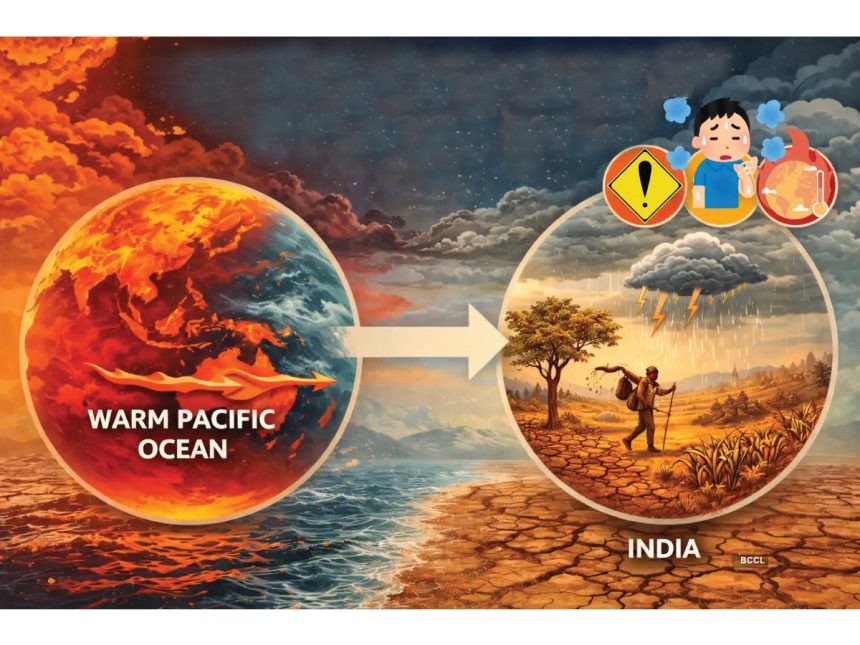
El Niño is a naturally occurring climate phenomenon characterised by warmer-than-average sea surface temperatures in the central and eastern equatorial Pacific Ocean
The World Meteorological Organization (WMO) has warned that there is an 80% probability of El Niño developing between June and August 2026, increasing the likelihood of extreme weather events across several parts of the world.
In its latest update, the United Nations (UN) weather agency said unusually warm ocean temperatures in the tropical Pacific are driving the emergence of El Niño conditions, which are expected to influence global temperature and rainfall patterns over the coming months. The probability of El Niño persisting through November is estimated at 90% or higher, with most forecast models suggesting the event could be moderate to strong.
El Niño is a naturally occurring climate phenomenon characterised by warmer-than-average sea surface temperatures in the central and eastern equatorial Pacific Ocean. It typically occurs every two to seven years and can alter weather patterns worldwide.
WMO Secretary-General Celeste Saulo said the phenomenon could intensify droughts, heavy rainfall events and heatwaves on land and in the oceans. The agency noted that even moderate El Niño episodes can increase the frequency and severity of weather extremes.
The WMO forecasts above-normal temperatures across most parts of the world during the June-August period. It also expects below-average rainfall in several regions, including parts of South Asia, Central America and the Horn of Africa.
In South Asia, India El Niño has historically been associated with weaker monsoon rainfall, although the extent of its impact varies from year to year. The agency said reduced rainfall could heighten drought risks in some regions while increasing pressure on agriculture, water resources and energy systems.
“The science is clear: El Niño is arriving on our doorstep in the coming months with 90% certainty. The world must treat it as the urgent climate warning it is. El Niño conditions will pour fuel on the fire of a warming world,” said UN Secretary-General António Guterres, in his statement.
In late April to mid-May, the sea-surface temperature in the central-eastern Equatorial Pacific – the area used as a monitoring reference – was approaching El Niño thresholds, according to observations from different platforms used by WMO.
The WMO said advance warnings should help governments and businesses prepare, particularly in climate-sensitive sectors such as agriculture, water management, energy and public health.
El Niño is characterized by a warming of ocean surface temperatures in the central and eastern Equatorial Pacific. It typically occurs every two to seven years and lasts around nine to twelve months.
It generally begins developing between March and June and reaches its peak intensity between November and February, with impacts on global temperatures typically being most pronounced in the second year after development.

