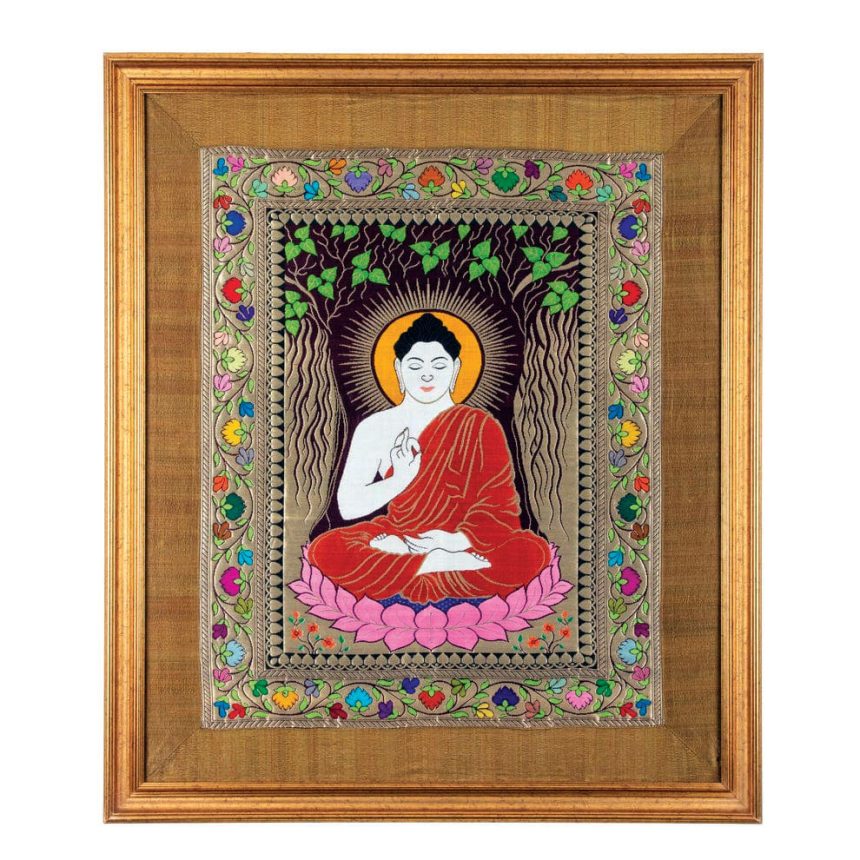
Prayasa is a handwoven silk enterprise shaped by grief, purpose, and a slow approach to modern luxury. Founder Jyoti Jhanvi Saxena is now developing an experiential display space in Goa
VINIKA VISWAMBHARAN | NT BUZZ
Prayasa came out of a very broken phase in Jyoti Jhanvi Saxena’s life.
A hand woven silk textile and tapestry house working with rare weaving traditions from eastern Uttar Pradesh, Saxena founded Prayasa in 2024. But the story began much earlier.
“I lived in Goa for years,” she says. “I built businesses here, Goa taught me the value of time, comfort and thoughtful design. That understanding stays with me even today.”
In June 2023, while on a summer trip to Texas, Saxena lost her husband suddenly to cardiac arrest. “There is no preparation for something like that. One moment life is stable, the next moment you are completely lost. No matter how strong you think you are, grief changes your direction,” she says. “You are forced to ask yourself, what now?”
The word ‘Prayasa’ came to her during this period. “It is a Sanskrit word that means to keep putting effort,” she explains. “For me, it became a reminder. To rebuild, to stand up again, even when you don’t know how.”
Saxena had always been drawn to textiles. Trained in business administration, she later studied interior design in India and Hong Kong. “Interiors teach you to understand texture, colour and material,” she says. “You realise that spaces are incomplete without craft.”
Her exposure to artisans came through interior projects and collaborations, including hospitality work in Goa. “Clients wanted something meaningful on their walls,” she says. “Not mass produced décor, but work with a story.”
Eastern Uttar Pradesh, where silk weaving once thrived, became her focus. “This form of weaving had almost lost its identity,” she says. “Before COVID-19, international demand disappeared. Artisans left.”
When she began searching for weavers in early 2024, it took months. “Many are in their late 40s or 60s. This knowledge is generational. It is not
taught in colleges,” she says.
Prayasa’s workshop was set up in Banaras in 2025, followed by an online launch. The brand produces silk tapestries alongside smaller, products such as pocket squares, stoles, ties, cushions and table runners.
“We operate across three divisions,” explains Saxena. “One is corporate and bespoke gifting. We create monogrammed silk pieces for companies, conferences, films and weddings.” The brand has also collaborated on hospitality interiors, including luxury hotels and curated sets for international film projects. The second vertical is the online platform where individuals can buy curated fashion and home products for themselves. The third is exports. Finished products and silk textiles are exported to markets like the U.S., Japan, Singapore and the Middle East.
She describes Prayasa as a quiet rebellion against mass production. “This weaving cannot be rushed,” she explains. “We use heavy tension weights. The silk becomes stronger, not weaker. Power looms increase quantity but reduce quality and
eliminate livelihoods.”
Ethical production is central to the brand. “If we scale without care, we lose the soul of the work,” she says. “And we increase the carbon footprint. That makes no sense to me.”
And Goa remains an important part of Prayasa’s journey. The brand works closely with architects and designers on interior projects in the state, including luxury hotels, private homes and weddings.
An experiential display space is also being developed in Goa. “I want people to see the tapestries, touch the silk, and understand how long it takes,” says Saxena who also runs a salon in Vasco. “That connection changes how you value craft.”
Saxena states that she sees herself as a bridge between Indian artisans and the world. “I am just a small part of it,” she says. “The craft leads. We follow.”